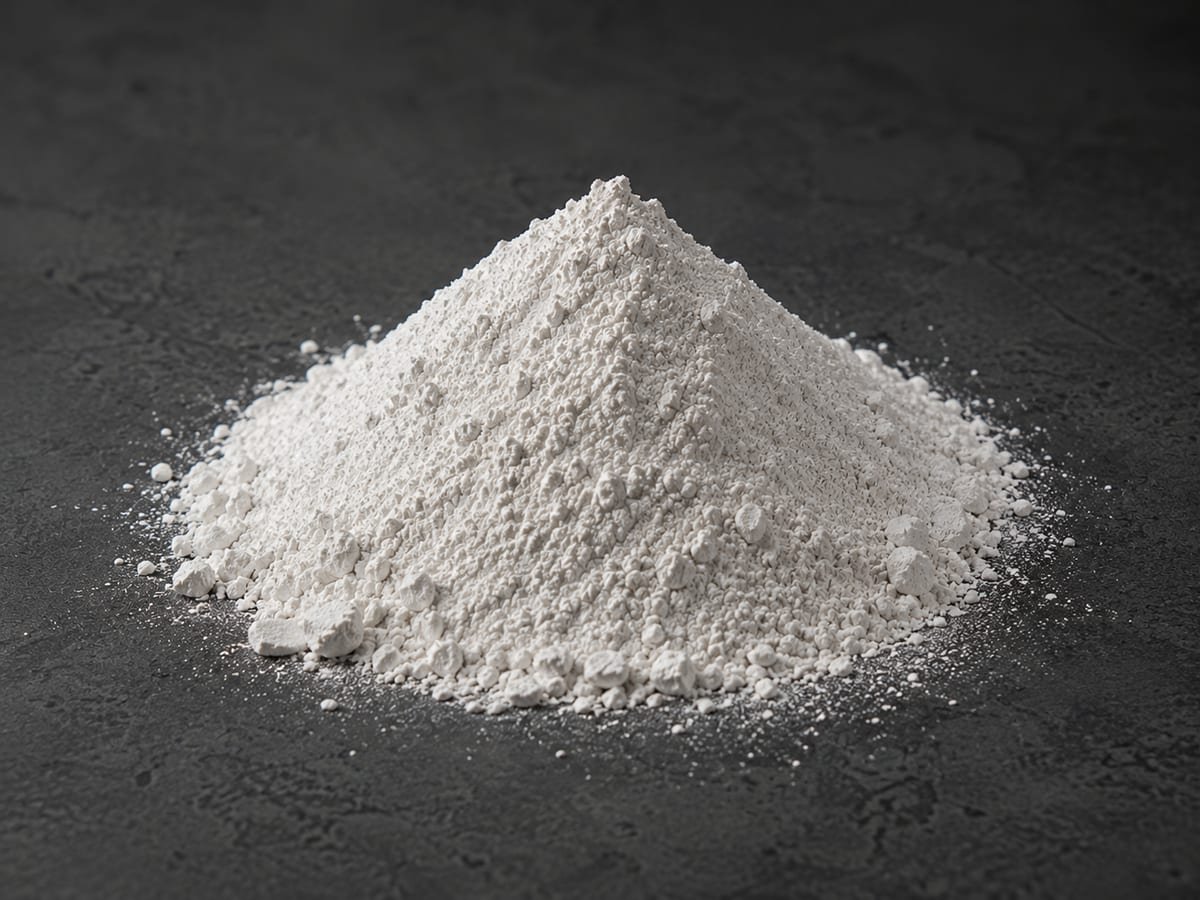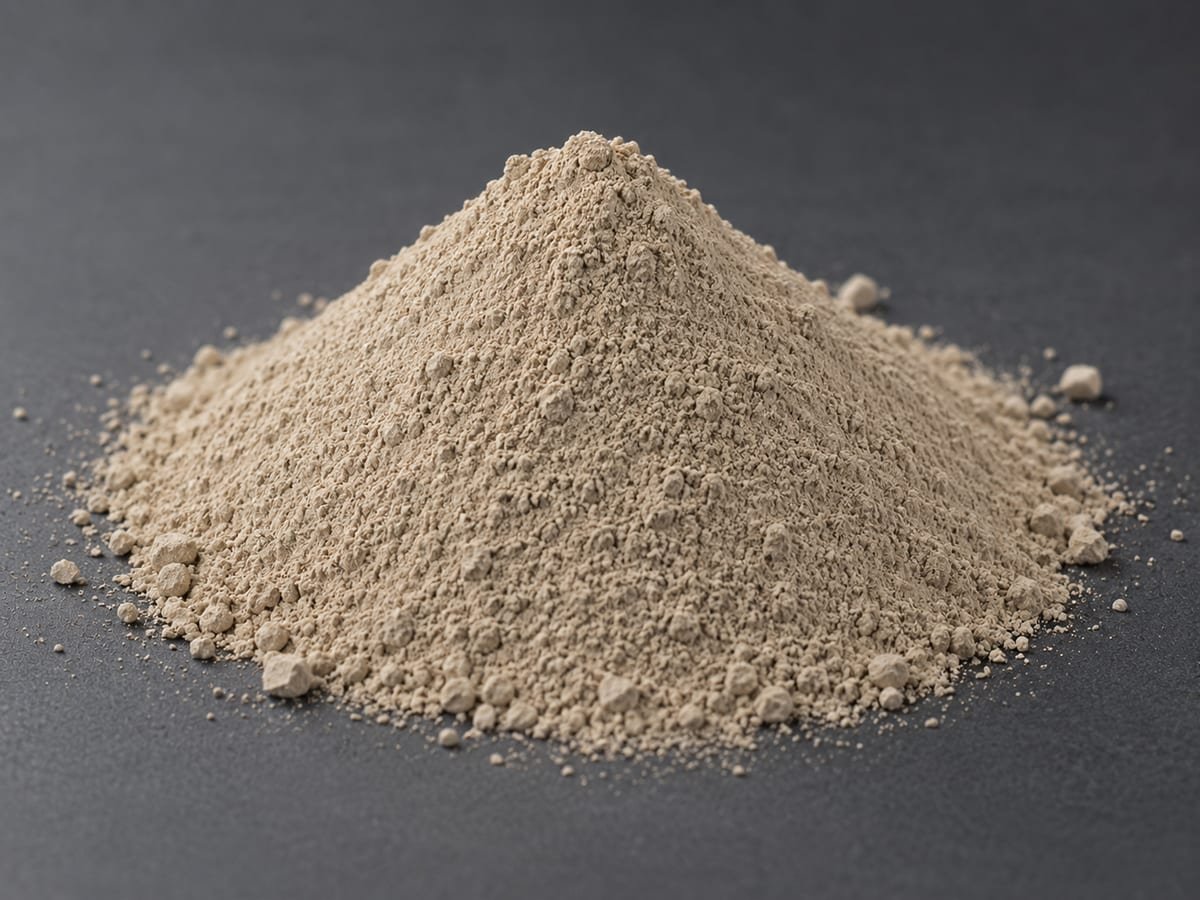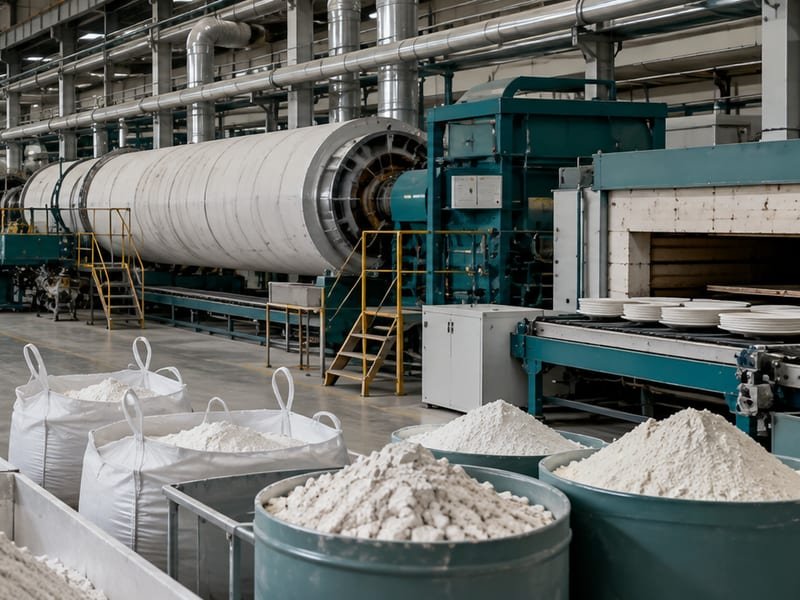
Two clay shipments can carry the same chemical analysis and still cast completely differently on the shop floor — one flowing and depositing evenly in the mould, the other turning dilatant or shear-thickening under the same pumping and pouring conditions — because slip casting behavior is controlled by particle size distribution, a property a standard chemical spec doesn’t capture.
Root Causes
Particle size is documented as one of the most important parameters in ceramic production, requiring optimization to achieve the desired physical and mechanical properties in the finished piece. Maintaining a target particle size distribution requires controlling the dispersion stability of the slip itself — the ability of particles to stay suspended so that deposition onto the mould walls happens evenly rather than unevenly. Research on slip casting has identified an optimal particle size range, roughly 100-300 nanometers, for producing concentrated suspensions with low viscosity and fired bodies with density close to the theoretical maximum under conventional pressureless sintering.
Particle size distribution also drives a specific, well-documented casting defect: segregation during the casting process, where successive fine/coarse/fine layers deposit unevenly depending on the particle size ratio present, the total solids volume fraction, and how long the slip was milled — a defect visible only through particle size distribution analysis and microscopy, not through bulk chemistry testing. Dilatancy — where the slip resists flow and thickens under shear instead of pouring smoothly — is documented as a particularly difficult problem specifically in slips containing very coarse, non-plastic material, and is addressed through particle size distribution adjustment or slip chemistry changes rather than through dosage changes to the plasticizer alone.
What This Means for Raw Material Selection
Because casting behavior tracks particle size distribution rather than bulk chemical composition, a kaolin or bentonite batch that passes a standard chemistry check can still behave inconsistently in the slip tank if its particle size distribution has shifted — coarser material increasing dilatancy risk, or a shifted fine/coarse ratio changing how the slip segregates during deposition.
The practical points for a buyer are: specify and verify particle size distribution data alongside chemical analysis for casting-grade kaolin and bentonite, rather than treating a chemistry-only Certificate of Analysis as sufficient for a slip-casting application; flag any move toward coarser or wider-distribution material as a casting-behavior risk even when the bulk chemistry is unchanged, since coarse, non-plastic fractions are specifically what drives dilatancy; and treat bentonite dosing (typically in the low single-digit percent range for plasticity and suspension stability) as inseparable from the particle size profile of the kaolin it’s suspending, since the two properties interact to determine whether a given slip formulation casts predictably at production scale.
Sources: AZoM technical article on ceramic casting slips, particle size analysis, and zeta potential; ScienceDirect peer-reviewed research on the effect of particle size on the shaping of ceramics by slip casting and on particle segregation phenomena during slip casting; Ceramic Industry technical reference on understanding ceramic slips.