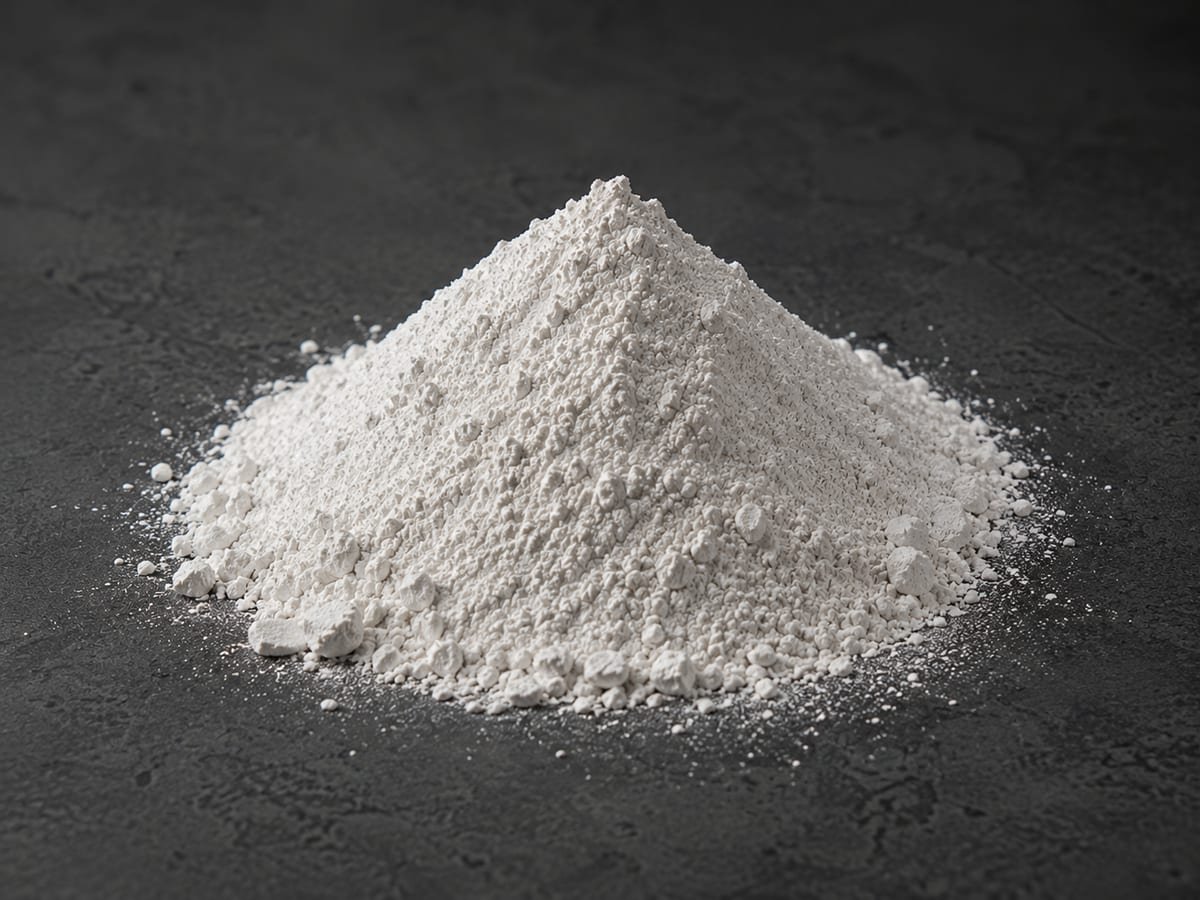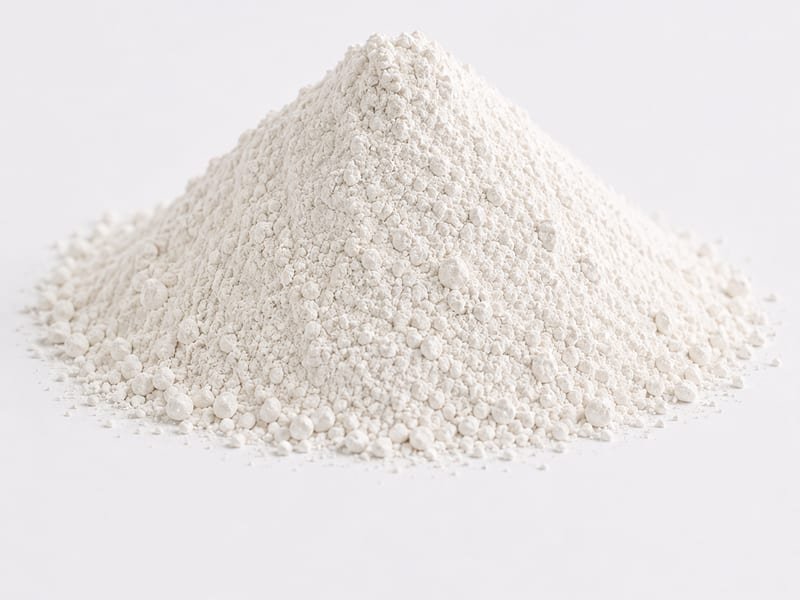
A fired ceramic body can pass every bulk chemistry check and still come out of the kiln with black or brown specks scattered across the surface — because specking is caused by discrete contaminant particles, not by the overall composition, and no amount of averaging the raw material chemistry catches a problem that only shows up grain by grain.
Root Causes
Specking on ceramic ware is documented as occurring where raw materials are contaminated with natural iron minerals, such as iron stone concretions, or with iron introduced during the refining process. Many of the deposits that feed common ceramic raw materials — feldspar, silica sand, ball clay, and kaolin among them — carry problematic magnetic minerals including micas (muscovite and biotite), hematite, chromite, and iron-stained quartz, essentially unavoidable at the deposit level and requiring active removal rather than source selection alone. Iron pyrite minerals that don’t melt in oxidation firing can also convert to a metallic state under the reduced-oxygen conditions of reduction firing, producing specks that wouldn’t necessarily appear in an oxidation-fired test.
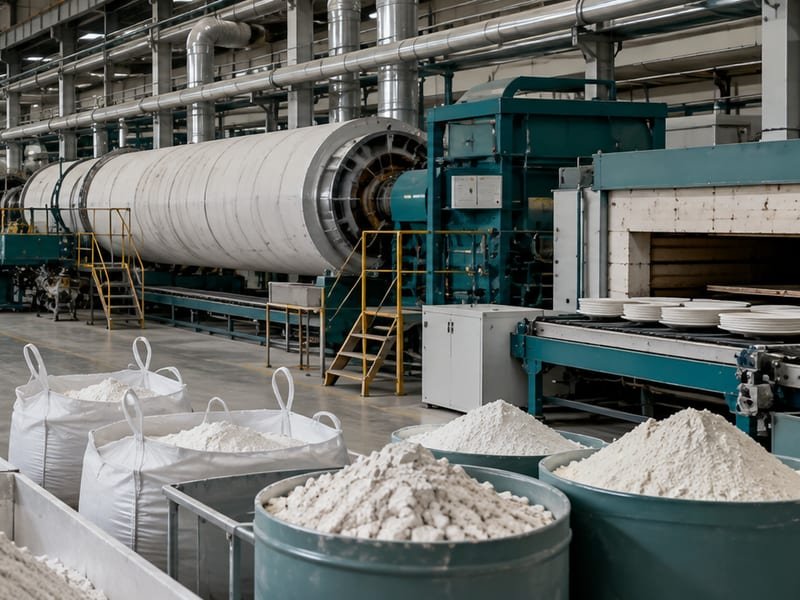
The industry threshold commonly used for whiteware and porcelain producers is that any iron-containing particle remaining on a 150-mesh screen is treated as a threat to a white-burning body, glaze, or engobe — a specific, testable cutoff rather than a general purity judgment. Producers of finished ceramic ware address this by slurrying, sieving, filter-pressing, and pugging bodies to assure speck-free surfaces, and by running magnetic separation somewhere in the powder flow to pull out the ferrous contaminant particles before they reach the kiln.
What This Means for Raw Material Selection
Because specking is a particle-level contamination problem rather than a bulk-chemistry problem, it isn’t caught by the same Fe2O3 percentage specification that controls overall body whiteness — a kaolin or feldspar batch can test within spec on average iron content and still carry enough coarse magnetic-mineral particles to speck a white body. Buyers troubleshooting visible specking should specify and verify screening or magnetic-separation performance directly (for example, a 150-mesh retention limit on iron-bearing particles) rather than relying on the same COA line that controls bulk color.
The practical points for a buyer are: request supplier data on magnetic-mineral removal and mesh-retention testing specifically, not just bulk Fe2O3/TiO2 percentages, when specking is the defect being chased; recognize that a body fired in reduction is more exposed to specking from iron pyrite than the same body fired in oxidation, so the firing atmosphere used in supplier qualification testing should match production conditions; and treat specking and overall whiteness as separately diagnosed and separately specified quality parameters, since a fix aimed at one (finer magnetic separation) does not correct the other (bulk iron content driving fired shade).
Sources: Digitalfire technical reference on specking on ceramic ware and reduction speckle mechanisms; Bunting Magnetics technical guide on magnetic properties of ceramic minerals and problematic mineral contaminants in feldspar, silica sand, ball clay, and kaolin deposits; Seattle Pottery Supply and Arbuckle clay-body reference materials on natural imperfections in clay bodies.