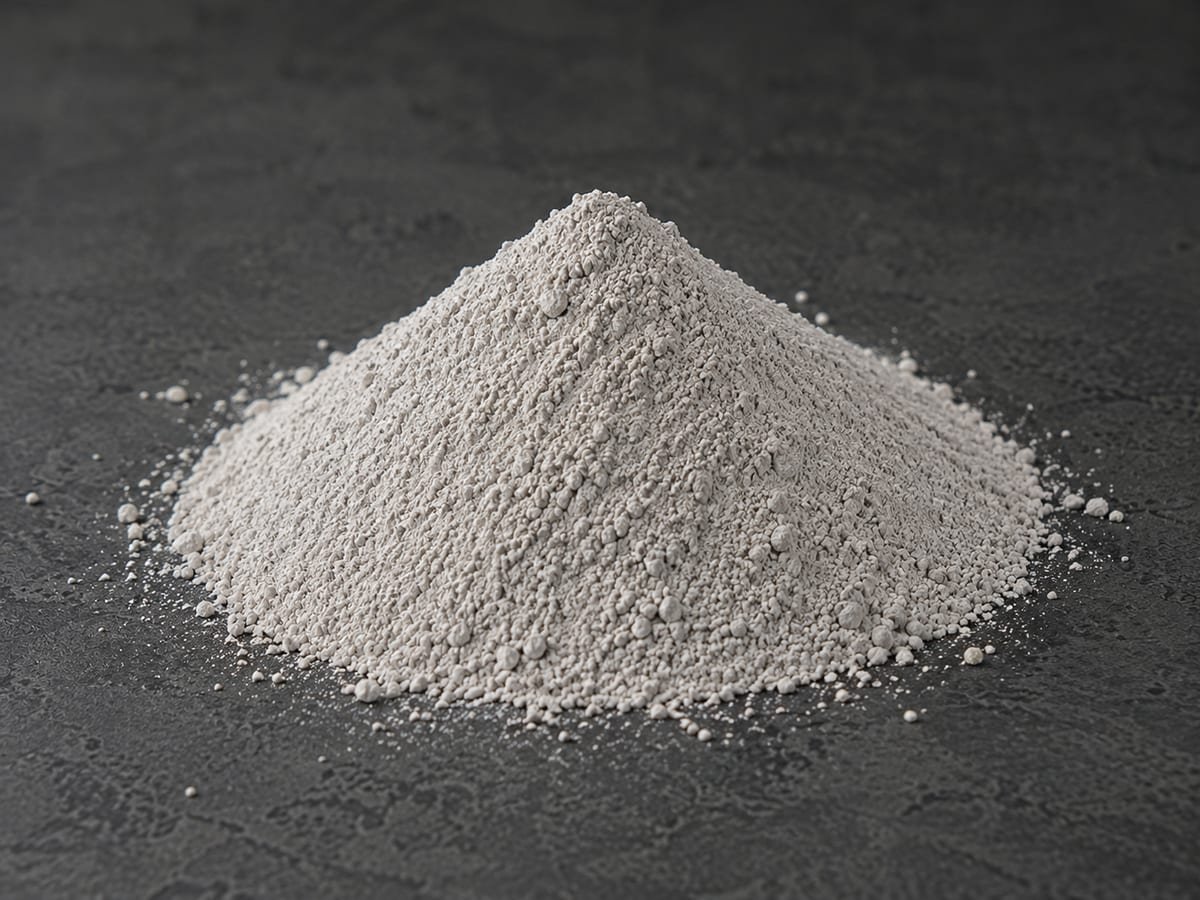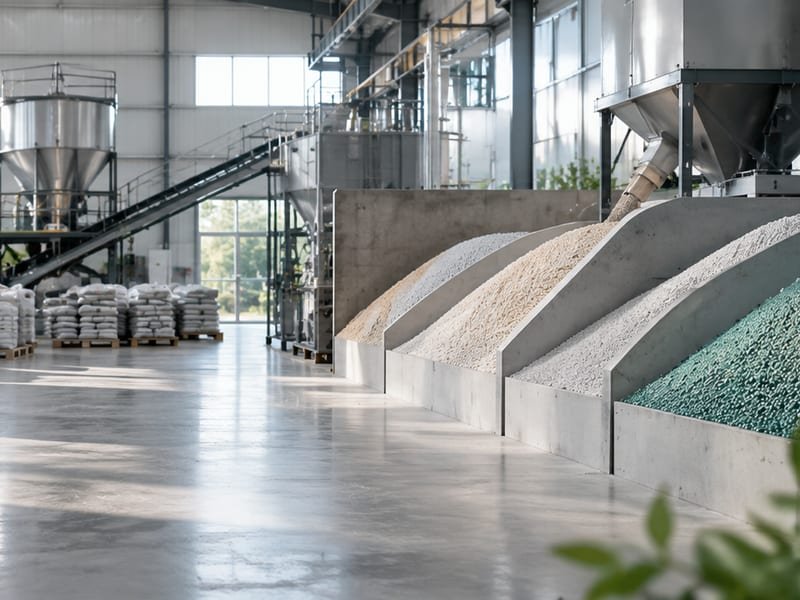
Neutralizing value — reported as calcium carbonate equivalent (CCE) — is the standard measure of how much acid-neutralizing capacity a given weight of agricultural dolomite actually delivers, and it is not a fixed number for “dolomite” as a category. It varies with the purity of the specific deposit and processing lot, which is why every shipment needs its own tested figure rather than a catalog assumption.
Root Causes
CCE is measured against a defined method — AOAC 955.01, “Neutralizing Value for Liming Materials,” with an internationally harmonized titrimetric equivalent in ISO 20978:2020 — that expresses a material’s acid-neutralizing capacity relative to 100%-pure calcium carbonate. Pure, stoichiometric dolomite has a theoretical CCE above 100% (commonly cited around 108%) because magnesium carbonate neutralizes slightly more acid per unit mass than calcium carbonate does on a molar basis. In practice, however, commercial agricultural dolomite carries whatever impurities its specific deposit and crushing lot contain — clay, silica, and other insoluble material that doesn’t react with soil acid — which is why documented CCE values for real shipments typically run lower, commonly in the 90-98% range, with many state agricultural regulations setting 90% CCE as the minimum a product must meet to be legally marketed as agricultural limestone.
What This Means for Raw Material Selection
Because CCE reflects deposit-specific purity rather than a chemistry constant, it is a mandatory per-shipment test result, not a specification that can be assumed to hold from one delivery to the next even from the same supplier. It’s also only half of the performance picture: CCE measures how much acid a fully dissolved unit of the material can neutralize, while fineness (sieve analysis) determines how much of that capacity is actually released within the current growing season versus over several years as coarser particles slowly dissolve. The two are combined into an effective neutralizing value figure in most regulatory frameworks precisely because chemical purity alone overstates a coarse product’s real field performance.
The practical buying discipline is to request current AOAC 955.01 (or ISO 20978) test data on every shipment’s certificate of analysis, verify it clears the regulatory or contractual minimum CCE, and read it alongside the fineness factor rather than in isolation — a high-CCE, coarse-ground load and a lower-CCE, finely-ground load can deliver similar effective field performance, and dosing decisions based on CCE alone risk both under- and over-application.
Sources: AOAC Official Method 955.01, “Neutralizing Value for Liming Materials”; ISO 20978:2020, “Liming Material — Determination of Neutralizing Value — Titrimetric Method”; Mississippi State University Extension, “Agricultural Limestone’s Neutralizing Value”; Minnesota Department of Agriculture, “Agricultural Liming Material Analysis — Determining Quality and Effective Neutralizing Value.”