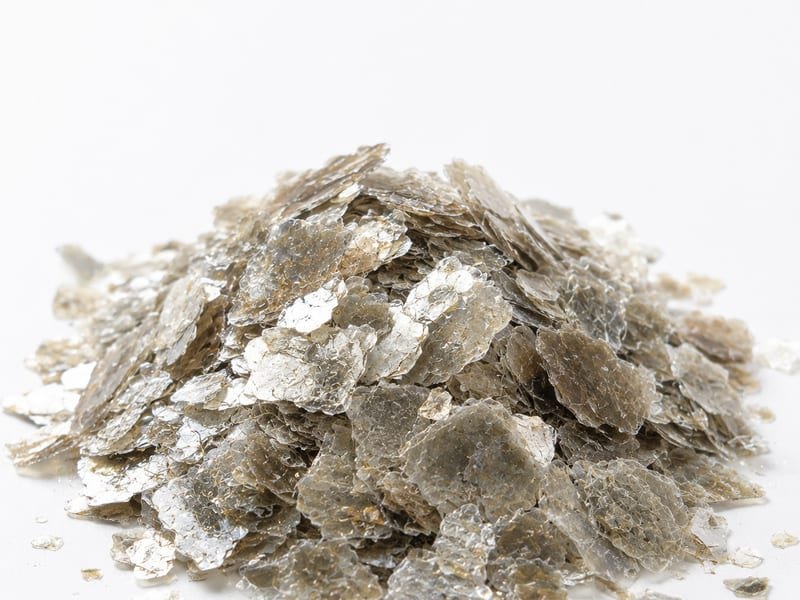
A cosmetic shade developed and approved on the bench has to reproduce identically at full production scale and again in every repeat batch afterward — and mica, the pearlescent base of most shimmer and many matte cosmetic pigments, is exactly the kind of natural mineral where that reproducibility isn’t automatic.
Root Causes
Color reproducibility in a mica-based formula depends on more than pigment percentage. Industry technical literature on cosmetic color matching documents that every stage of manufacture — raw material lot, mixing energy, grinding, and sifting — has to be controlled consistently, because the same nominal formula processed with different mixing energy can develop visibly different color: more processing energy develops a shade further, so two batches with identical pigment loading can still diverge in final color if energy input during processing isn’t held constant.
The mica substrate itself adds a second layer of variability specific to natural minerals. Because natural mica is a mined mineral, its optical base can shift subtly from shipment to shipment as the source deposit varies, which shows up downstream as shade drift even when the colorant added on top of the mica base is held constant. This is documented as one of the reasons formulators favor synthetic mica for shade-critical work: synthetic mica delivers a consistent optical effect batch to batch because it isn’t subject to the same natural-deposit variability, reducing the reformulation and rework that natural-mica shade drift can otherwise require.
Surface treatment plays a supporting role in both dispersion and shade consistency. Hydrophobic surface treatments, commonly used in cosmetic-grade mica and pigment products, improve dispersion behavior, reduce dusting, and help pigment distribute more predictably through a formula — which matters for shade consistency because uneven pigment dispersion within a batch produces the same kind of visible shade variation as a genuine raw-material lot difference, even when the underlying pigment and mica are correctly proportioned.
What This Means for Raw Material Selection
For a buyer formulating shade-critical cosmetic products, mica sourcing and grade selection are shade-consistency decisions, not just cost or texture decisions. Certified cosmetic-grade mica suppliers are documented to maintain lot-to-lot uniformity specifically for shade, shimmer intensity, and dispersion behavior — properties that a general industrial mica grade is not necessarily controlled for, even if its bulk chemistry looks similar.
The practical specification points are: where shade consistency is critical and reformulation cost is high, evaluate synthetic mica against natural mica specifically for its documented batch-to-batch optical consistency, rather than defaulting to natural mica on cost alone; confirm whether a mica grade carries a dispersion-oriented surface treatment, since this affects how predictably shade develops during mixing; and hold mixing energy and processing parameters consistent between bench development and full-scale production, since even a perfectly consistent mica and pigment lot can still produce shade drift if processing energy isn’t controlled the same way at both scales.
Sources: Cosmetics & Toiletries, “Make the Color Connection: The Art and Science of Shade-matching with Pigments”; general cosmetic mica and pigment industry technical literature on natural versus synthetic mica batch consistency, surface treatment, and dispersion behavior in shade-critical formulations.