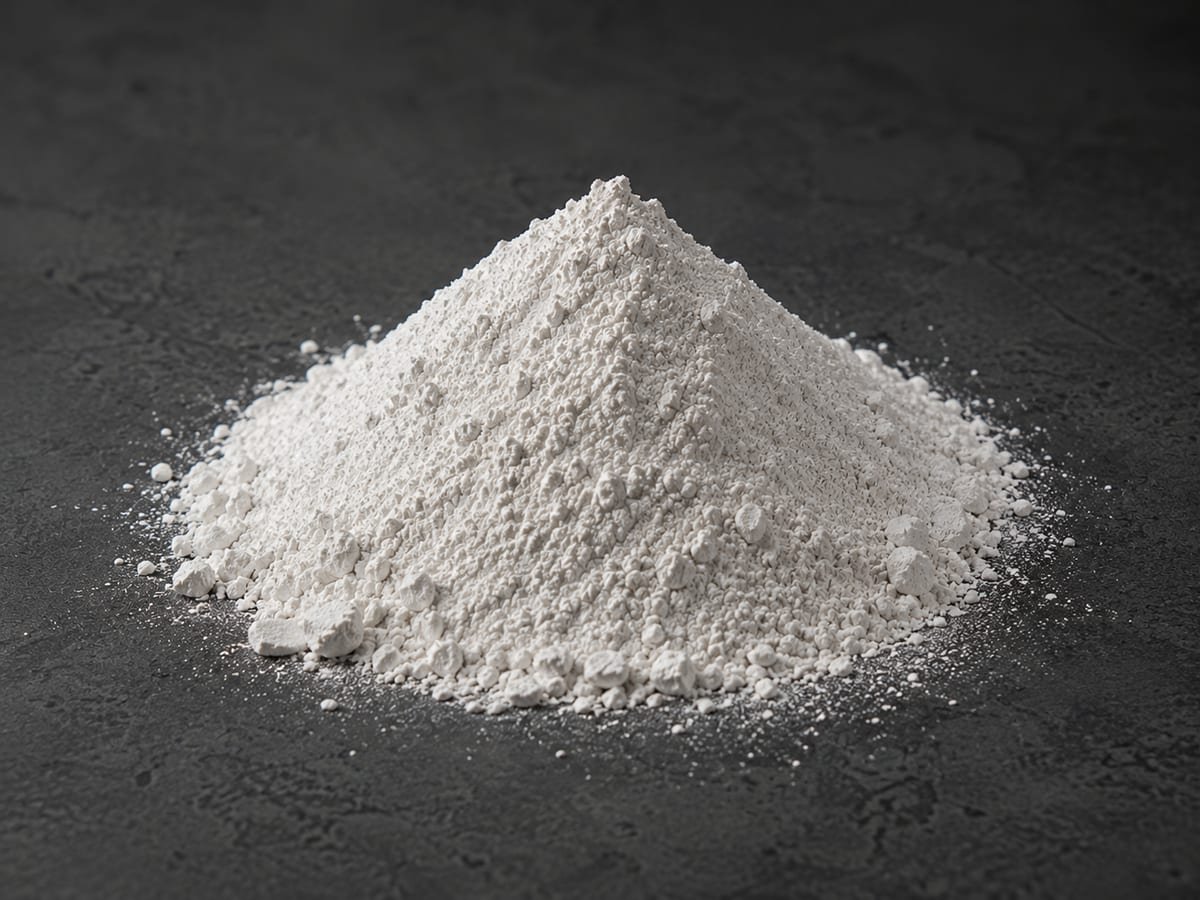
“Kaolin” isn’t a single specification a buyer can source generically — industrial and cosmetic grades diverge sharply on refinement, and a supplier quoting kaolin without specifying which tier they mean is quoting an incomplete answer.
Root Causes
Industrial-grade kaolin is documented as not refined to a microbial-, particle-, and heavy-metal-free product, typically carrying coarser particles and the possible presence of quartz, feldspar, or iron oxide impurities, with mineral composition that varies inconsistently between lots — characteristics that are acceptable, even functionally useful, in industrial applications like paper coating or ceramics where bulk properties matter more than absolute purity. Cosmetics and pharmaceutical applications sit at the opposite end of that spectrum: these industries are documented as requiring extremely refined material, which is why industrial kaolin is commercially segmented into distinct application grades — ceramic, paper, paint, rubber, and cosmetic among them — each defined by its own particle size, purity, and brightness specification rather than a single generic “kaolin” standard.
This grade segmentation exists because the two applications genuinely need different things from the same base mineral: a ceramics or paper producer values kaolin’s bulk plasticity or coating performance, while a cosmetic formulator needs the fine, consistent particle size and low-impurity profile that governs sensory feel, oil absorption, and how the mineral performs in a formulation applied directly to skin. Buying “kaolin” without specifying which of these grade tiers is being quoted risks receiving material refined for an entirely different application’s requirements.
What This Means for Raw Material Selection
Because industrial and cosmetic kaolin diverge on particle size, purity, and mineral consistency rather than being the same material at different price points, a buyer sourcing for cosmetic formulation needs to confirm the specific grade tier being quoted, not assume “kaolin” from any supplier is interchangeable.
The practical points for a buyer are: request the specific application-grade designation (cosmetic grade specifically, not ceramic, paper, paint, or rubber grade) rather than accepting a generic kaolin quote, since these are documented as commercially distinct product tiers with different refinement levels; verify particle size distribution and brightness data for the cosmetic-grade material specifically, since these are the documented parameters that differ most between grade tiers and directly affect formulation performance; and treat a new kaolin source as requiring full requalification against cosmetic-grade specifications even if the supplier has a track record in another kaolin application, since strong performance in ceramics or paper grade doesn’t establish that the same source can deliver the refinement cosmetic formulation requires.
Sources: Jay Ganesh Minerals technical articles on kaolin clay grade differences (industrial versus cosmetic grade) and industrial kaolin grade classifications; NBInno technical comparison of talc and kaolin powder grades across pharmaceutical, cosmetic, and industrial applications, covering the general grade-segmentation principle applicable across cosmetic mineral raw materials.