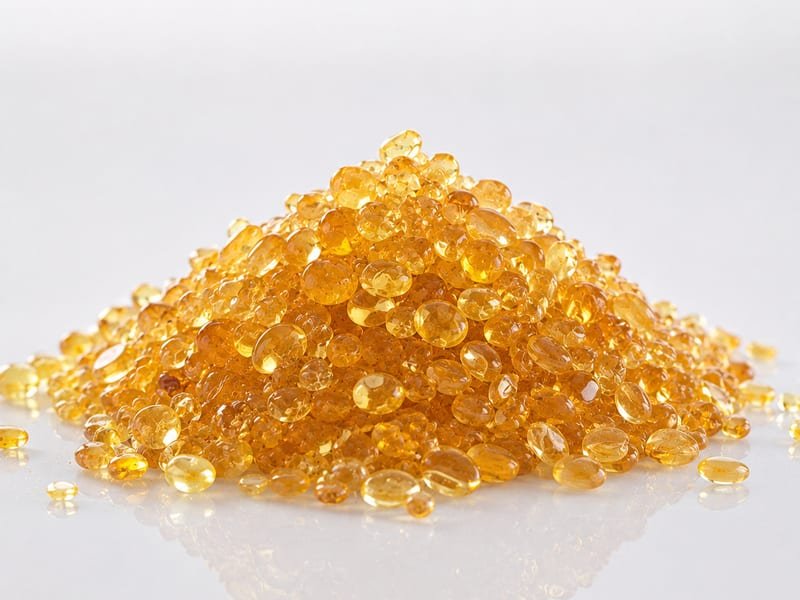
A formulator searching for a “low-VOC tackifier” is usually responding to a real compliance deadline, not a general sustainability preference. Regional VOC regulations set hard content limits by adhesive category, and because tackifier chemistry is tied to specific delivery systems (solvent-based, water-based, or 100%-solids hot-melt), the tackifier decision and the VOC-compliance decision are no longer separable for many adhesive formulations.
Root Causes
The South Coast Air Quality Management District’s Rule 1168, Adhesive and Sealant Applications, is one of the most detailed and widely referenced VOC regulations in the industry — it sets specific VOC content limits, expressed in grams per liter, for dozens of distinct adhesive and sealant categories, and it has been amended multiple times since its original adoption as regulators tightened limits over successive rulemakings. Because Rule 1168’s category-by-category structure is unusually granular, it has functioned as a de facto reference standard that influences specifications and formulation practice well beyond its home jurisdiction in Southern California, alongside parallel VOC content rules from CARB and other regional air-quality authorities.
Solvent-based adhesive systems, which historically offered formulators the widest tackifier compatibility window and the easiest processing, are the systems most directly constrained by these VOC limits, because the solvent itself is the VOC content the regulation is measuring. That regulatory pressure pushes formulation toward water-based (emulsion) and 100%-solids hot-melt systems, and each of those alternatives imposes a different constraint on tackifier selection: hot-melt systems require tackifiers with a compatible softening point and melt viscosity rather than solvent solubility, while water-based systems require tackifier dispersions or resins specifically designed for emulsion compatibility rather than the same resin used in solvent form.
What This Means for Raw Material Selection
The practical effect for a buyer is that tackifier qualification cannot be separated from the delivery-system decision the VOC regulation is effectively forcing. A tackifier resin qualified and performing well in a solvent-based formulation is not automatically usable, at the same loading or even the same chemistry, in a hot-melt or water-based reformulation undertaken to meet a VOC limit — softening point, compatibility with the base polymer, and (for water-based systems) dispersion stability all have to be re-verified for the new system, not assumed to carry over.
For a buyer operating in or shipping into a jurisdiction with adhesive VOC limits — Rule 1168 categories are a reasonable reference point even outside Southern California given how widely they are used as a benchmark — the practical steps are: confirm which Rule 1168 (or equivalent local) adhesive category the finished product falls under and its specific VOC limit in g/L, treat that limit as a hard input to the delivery-system decision rather than something addressed after the tackifier is chosen, and re-qualify tackifier compatibility fully whenever the delivery system changes to meet a VOC target, rather than treating the reformulation as a drop-in solvent substitution.
Sources: South Coast Air Quality Management District, Rule 1168 — Adhesive and Sealant Applications (as amended, California Air Resources Board technology clearinghouse copy); SCAQMD Rule 1168 Test Method Guidance Document; general adhesives industry literature on VOC-driven shifts from solvent-based to water-based and hot-melt formulation.