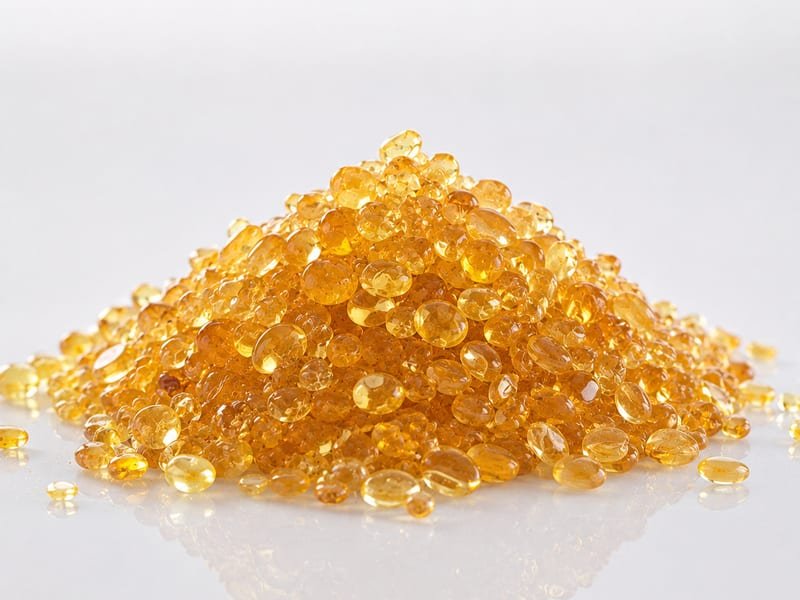
A buyer sourcing rosin-based tackifiers for the first time is often surprised to learn that supply reliability depends on things that have nothing to do with adhesive chemistry — pine tapping seasons, paper mill operating rates, and forestry economics half a world away. This is a structural feature of natural rosin feedstocks, not an occasional disruption, and it is the reason rosin-based and hydrocarbon-based tackifiers carry fundamentally different supply-risk profiles.
Root Causes
Rosin tackifiers are derived from one of two natural feedstock routes, and each is tied to a different, non-adhesive industry. Gum rosin comes from resin tapped directly from living pine trees, a manual, seasonal, weather- and labor-dependent harvesting process concentrated in specific pine-growing regions. Tall oil rosin, by contrast, is not tapped at all — it is recovered as a byproduct of kraft pulping, produced when crude tall oil is separated from the black liquor generated during wood pulp production and then fractionated. Because tall oil rosin only exists as a co-product of paper pulp manufacturing, its supply is structurally dependent on pulp mill operating rates, crude tall oil fractionation capacity, and the economics of the paper industry — not on adhesive-sector demand for rosin at all.
This means gum rosin availability is exposed to harvest conditions, labor availability, and regional forestry output in the producing regions, while tall oil rosin availability moves with an entirely separate industry’s fortunes: when paper and pulp production slows, tall oil supply tightens correspondingly, independent of how much rosin the adhesives industry wants to buy. Industry reporting on tall oil rosin markets documents this pattern directly, along with sensitivity to refinery and fractionation capacity, logistics constraints, and energy costs layered on top of the underlying pulp-industry dependency.
What This Means for Raw Material Selection
For a buyer, the practical consequence is that rosin-based tackifier supply cannot be evaluated the same way as a purpose-built petrochemical feedstock, because rosin producers are not optimizing production around adhesive-industry rosin demand — adhesive buyers are drawing from supply streams whose primary economic driver is forestry output or paper production. This is not a reason to avoid rosin-based tackifiers, since they remain a well-established, high-performance product category, but it is a reason to treat feedstock-route diversification as a real risk-management lever rather than a formality: a buyer whose specification allows either gum rosin or tall oil rosin-derived esters has more sourcing flexibility than one locked to a single route, and a buyer who understands which route a given supplier’s product actually comes from can anticipate supply tightness tied to pulp-mill operating rates or pine-tapping season conditions rather than being surprised by it.
Hydrocarbon-based tackifiers (C5, C9, and DCPD resins built from petroleum steam-cracker co-products) are not exposed to these same agricultural and forestry-cycle risks, though they carry their own feedstock volatility tied to crude oil and cracker economics — a distinct dynamic covered separately. For applications where either resin family is technically viable, understanding both supply-risk profiles, rather than defaulting to whichever tackifier is cheapest at the moment of purchase, is the more durable sourcing strategy.
Sources: general pine chemicals and tall oil industry literature on gum rosin tapping and kraft pulping byproduct recovery (SVD Pine Chem, “Gum Rosin vs Tall Oil vs Wood Rosin”); tall oil rosin market and supply-chain reporting (ChemAnalyst, ICIS) on pulp-mill operating rate and crude tall oil fractionation dependency.