An adhesive that bonds reliably at room temperature can fail completely in a cold warehouse or a winter shipping lane — not because the base polymer changed, but because the tackifier blend was never formulated for cold-temperature performance in the first place, and not every hot melt formulation is.
Root Causes
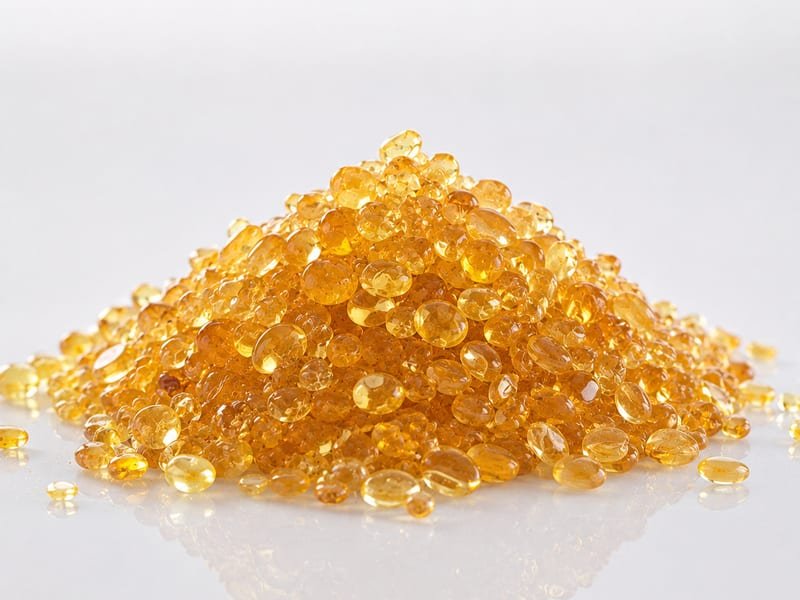
Tackifiers — rosin acid derivatives and their esters, aromatic or aliphatic petroleum-based resins, and terpenes — are the component that imparts tack and adhesion when a hot melt formulation is applied, and the specific blend chosen determines how that tack holds up as temperature drops. Phenol-modified rosin terpenes are documented as particularly effective for cold adhesion when formulated within specific ratio ranges: a rosin-to-phenol weight ratio of roughly 2.00 to 3.00 combined with a rosin-to-terpene ratio of roughly 1.40 to 2.40, which together deliver the heat resistance and cold adhesion balance a low-application-temperature hot melt needs.
The practical scale of the effect is documented in real testing: a modified-EO hot melt formulation achieved a 50% adhesion level at 0°F (−17.8°C) on inland board stock — a meaningful benchmark for freezer and cold-chain packaging applications where standard-formulation hot melts are documented as losing flexibility and adhesion when exposed to cold storage. Base polymer choice compounds the tackifier effect: styrene-based block copolymers are documented as providing better low-temperature flexibility and impact resistance than base polymers not selected with cold performance in mind.
What This Means for Raw Material Selection
Because cold-temperature adhesion is a specific formulation target requiring a particular tackifier ratio, not a property that comes automatically with any hot-melt-grade tackifier, a buyer sourcing for a cold-chain or winter-shipping application needs to confirm the formulation was actually engineered for that use case rather than assuming a standard hot melt tackifier blend will perform adequately at freezer temperatures.
The practical points for a buyer are: request cold-temperature adhesion test data specific to the target application temperature (freezer, winter outdoor, refrigerated transport) rather than relying on room-temperature tack and peel specs alone, since standard formulations are documented as failing outside their designed temperature range; verify the rosin-to-phenol and rosin-to-terpene ratio, or equivalent formulation detail, when sourcing a tackifier blend specifically for cold performance, since the documented ratio ranges are narrow and matter to the outcome; and evaluate base polymer selection alongside tackifier choice for cold-weather applications, since styrene-based block copolymers’ low-temperature flexibility is a documented complement to a cold-formulated tackifier system, not a substitute for one.
Sources: USPTO patent literature on low-application-temperature hot melt adhesive compositions documenting rosin-phenol-terpene ratio ranges and freezer-temperature adhesion test data; Lanco Adhesives technical guide on preventing adhesive failure in hot melt applications exposed to cold storage; Kuraray Elastomer technical blog on hot-melt adhesive composition and base polymer selection; Chemique Adhesives technical paper on hot melt adhesive formulation.