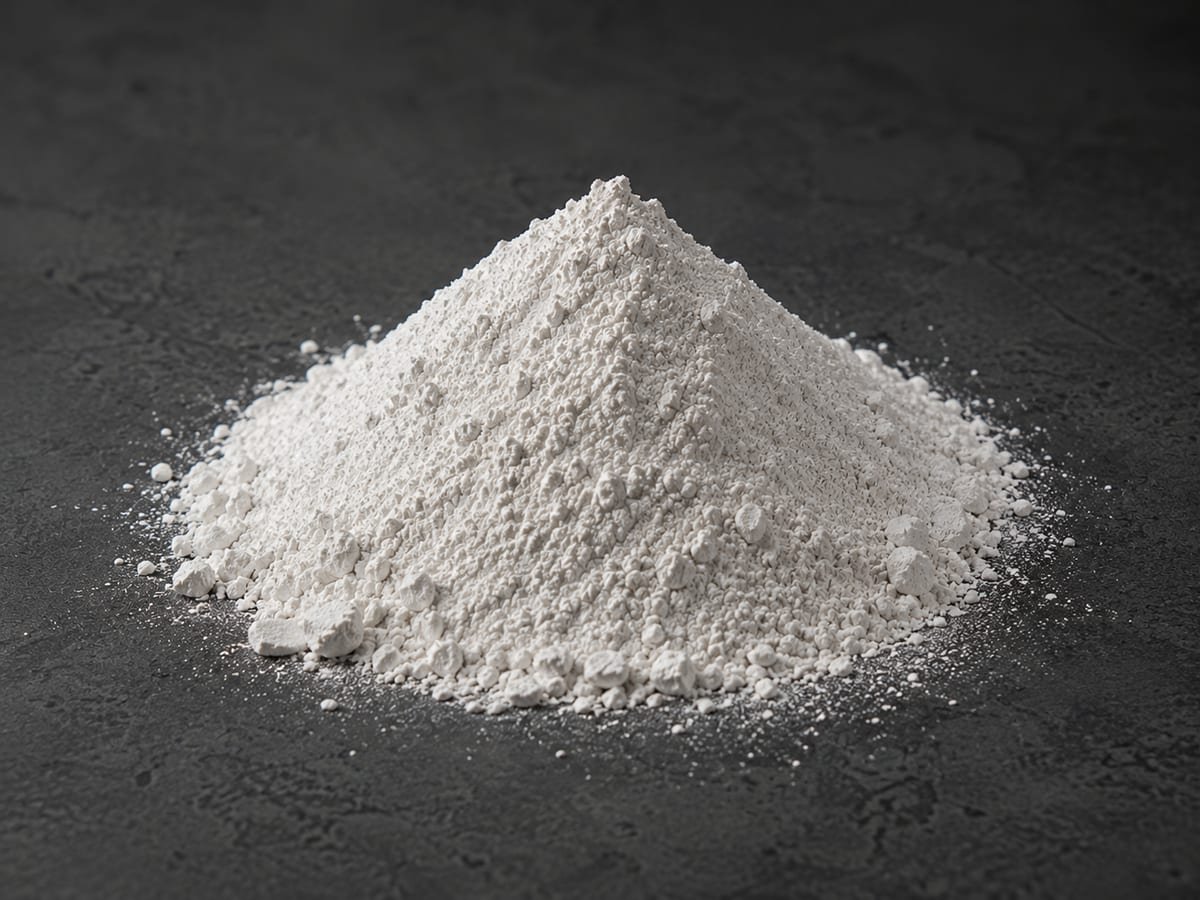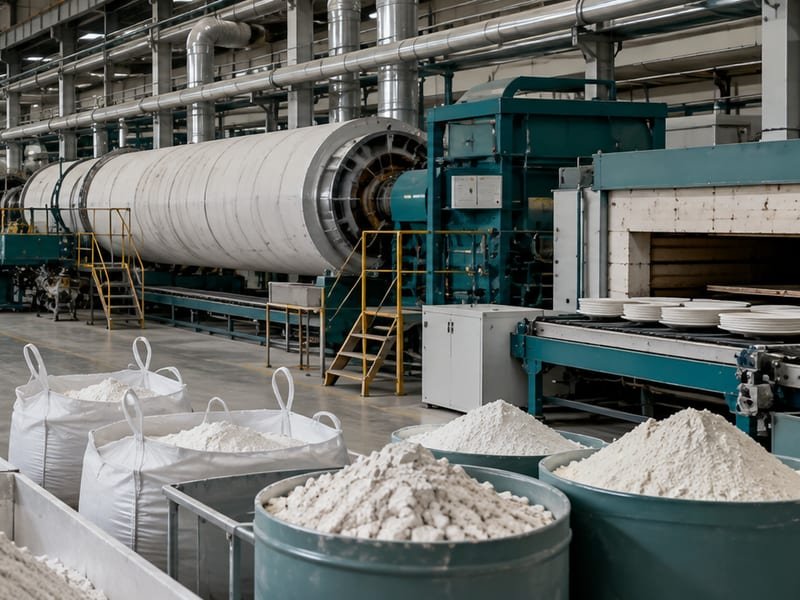
A tableware or sanitaryware body that fires bright white from one clay shipment and yellowish or reddish from the next usually isn’t a formulation problem — it’s iron content drifting between kaolin batches, at levels too small to see in the raw material but large enough to show up clearly after firing.
Root Causes
Iron content, reported as Fe2O3, is documented as one of the most important factors controlling fired color in kaolin: clays with higher iron fire to reddish or brown tones, while low-iron kaolin fires bright white. The relationship is quantified in the technical literature — kaolin at around 0.6% iron content is reported to achieve over 82% fired whiteness, and premium-grade kaolin used in whiteware is commonly specified with a Fe2O3 ceiling around 0.3% precisely because whiteness falls off sharply as iron content climbs above that range. Titanium content (TiO2) compounds the effect alongside iron, which is why both are tracked together in kaolin quality specifications for whiteware manufacturers.
This is a genuinely different failure mode from the ball clays that make up part of many bodies: ball clays typically fire to a buff or tan color due to their inherent iron or titania content, which is acceptable when a body’s blend is designed around it — but becomes a problem when the kaolin fraction meant to carry the whiteness varies in iron content shipment to shipment without the formulator knowing.
What This Means for Raw Material Selection
Because whiteness is driven by a specific, narrow Fe2O3 range rather than a general “purity” impression, the practical control point for a buyer is a Certificate of Analysis with a stated Fe2O3 ceiling for every batch — not just an initial qualification sample. Kaolin sourced against a documented iron ceiling (in the range of roughly 0.3% Fe2O3 or lower for premium white-firing grades) is verifiable in a way that a general purity claim is not, and it lets a formulator predict fired whiteness before committing kiln time to a full production run.
The related practical point is that whiteness and specking (visible black or brown spots from discrete iron mineral particles) are separate failure modes with separate causes — bulk Fe2O3 content controls overall shade, while contamination by iron-bearing mineral grains controls specking — so a buyer troubleshooting an off-white body should confirm which failure mode is actually occurring before changing sourcing specifications, since the fix for one (a lower bulk-iron kaolin grade) doesn’t address the other (magnetic separation or finer screening of contaminant particles).
Sources: kaolin fired-color and whiteness technical literature (Cheralle porcelain-quality reference; ceramic raw materials industry guides on Fe2O3/TiO2 fired-color relationships); Ceramic Arts Daily Community discussion of clay firing color variation; general kaolin quality specification practice reporting Fe2O3 ceilings for premium white-firing grades.