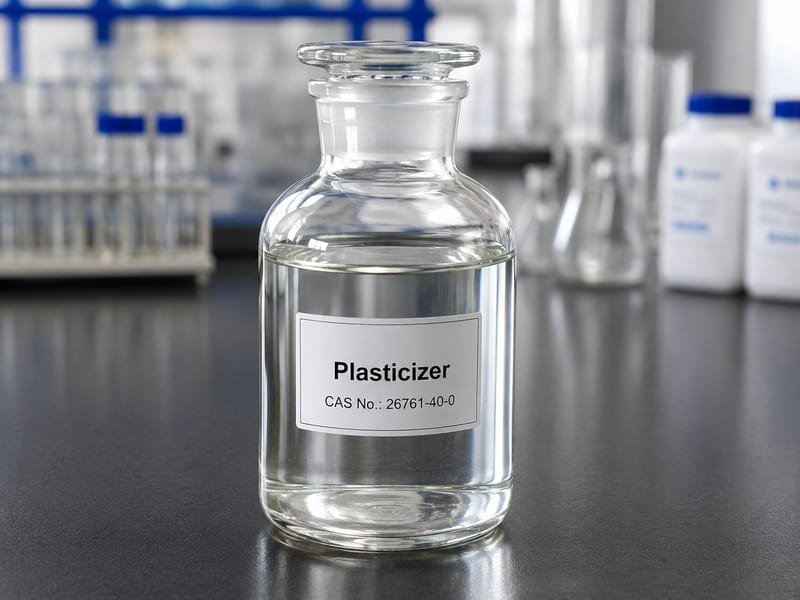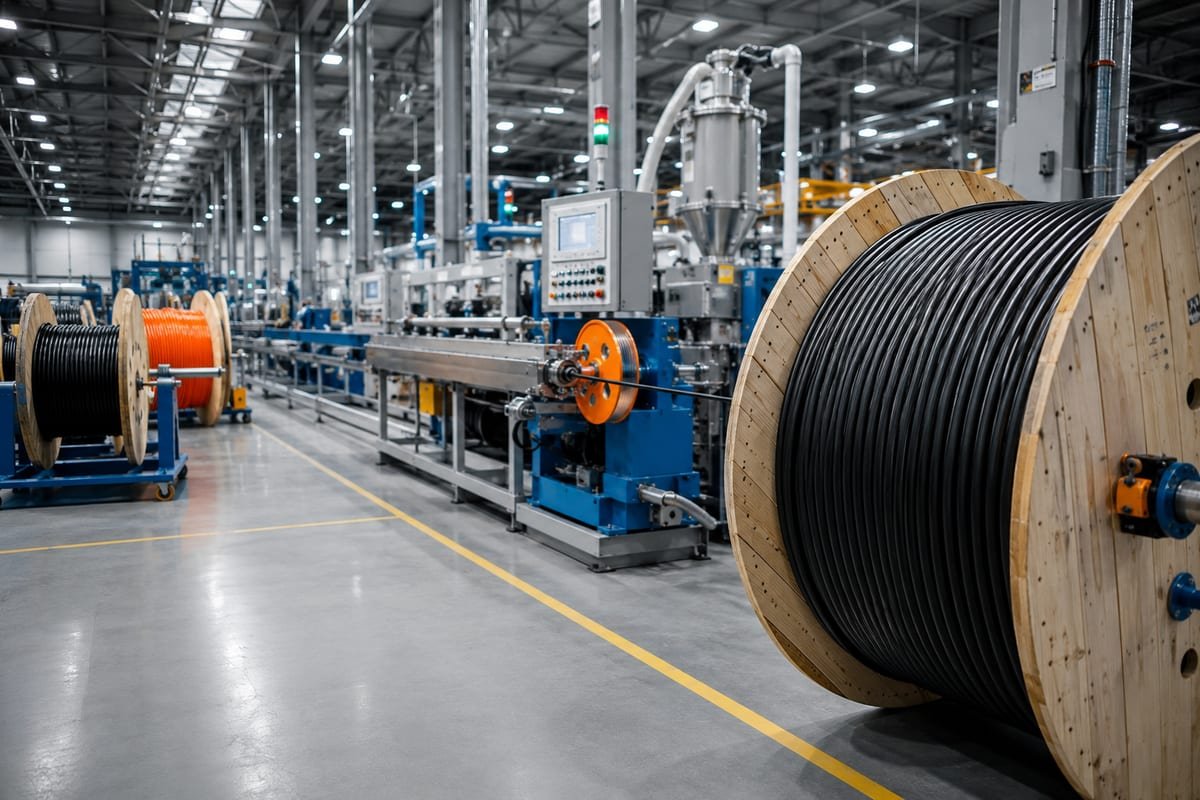
Flexible PVC cable insulation depends on plasticizer content for its flexibility, but that plasticizer is not chemically bonded into the PVC — it is physically dispersed within the polymer matrix, which means it can migrate out under the right conditions, gradually turning flexible insulation brittle and reducing the sealing and mechanical performance the cable was designed to deliver.
Root Causes
Because plasticizer molecules sit between PVC polymer chains rather than reacting with them, they remain free to move whenever a concentration gradient or a chemically attractive contact surface gives them somewhere to go. Peer-reviewed research on plasticizer migration from PVC cable insulation documents this as an extraction-driven process rather than simple evaporation in most service conditions: a material in direct, sustained contact with the PVC that has a chemical affinity for the plasticizer draws it out of the compound.
Certain contact materials are documented as particularly aggressive in this regard. Polystyrene, polyurethane foam, and rubber are repeatedly identified as materials whose chemical structure has strong affinity for common PVC plasticizers, to the point that migration into an adjacent polystyrene surface can become measurable within days of sustained contact. This matters directly for cable-wire applications because cables are frequently routed through or against thermal insulation, foam padding, or rubber grommets and seals — exactly the contact scenario that accelerates migration.
Temperature and contact area compound the effect. Migration and associated vaporization losses become the dominant degradation pathway at elevated service temperatures — commonly cited around 130°C for PVC cable applications — and migration rate scales with how much surface area of the cable is in sustained contact with the attracting material, not just which material it is. As plasticizer is progressively lost from the PVC layer, elasticity drops measurably, and the affected insulation becomes increasingly brittle and prone to cracking, which compromises both the moisture-sealing and mechanical protection the insulation was specified to provide.
What This Means for Raw Material Selection
Migration resistance is not a single property that scales uniformly across all plasticizers used in PVC cable compounds — different plasticizer chemistries carry different molecular weights and polarities, which affect how readily they diffuse and how strongly they’re drawn out by a given contact material. A plasticizer chosen purely for cost or for meeting an initial flexibility spec, without regard to the cable’s actual installation environment, can perform adequately in initial testing and still under-perform in service if the cable will spend its working life against foam insulation, rubber seals, or other migration-prone contact materials.
For a buyer, the practical implication is to specify plasticizer selection against the cable’s actual installed contact environment, not against a generic flexibility target alone: where cables will be routed against polystyrene, polyurethane foam, rubber, or similar materials, or will see sustained elevated-temperature service, a lower-migration plasticizer chemistry is a legitimate design requirement rather than an optional upgrade. Because migration losses accumulate over the cable’s service life rather than showing up in initial testing, re-verifying plasticizer retention under conditions that approximate actual installation contact and temperature — rather than relying solely on as-manufactured mechanical properties — is the practical way to catch a migration risk before it shows up as field brittleness and cracking.
Sources: “Plasticizer migration from PVC cable insulation — The challenges of extrapolation methods,” peer-reviewed research, Polymer Degradation and Stability, 2014; ScienceDirect topic overview on plasticizer migration mechanisms; general PVC cable compounding literature on contact-material compatibility (polystyrene, polyurethane, rubber) and temperature-dependent migration and vaporization losses.