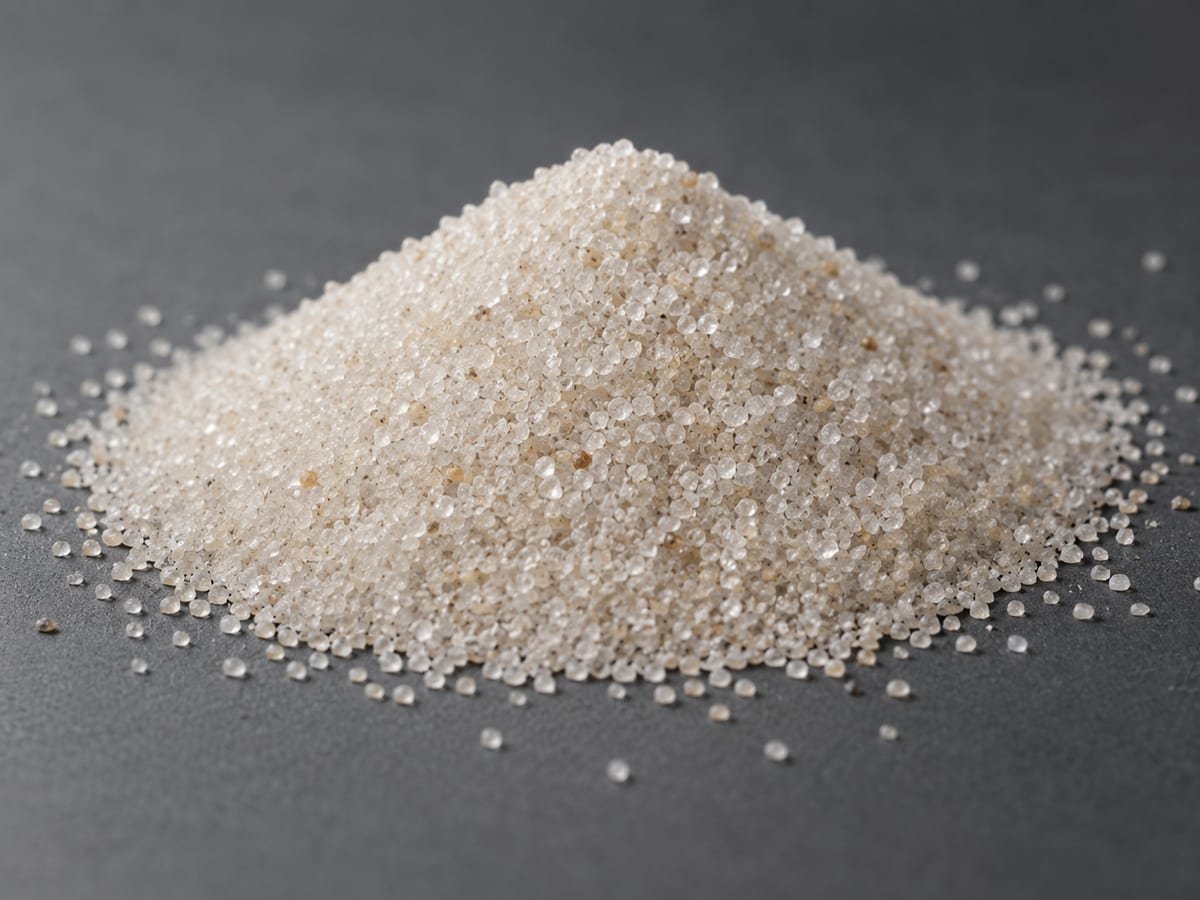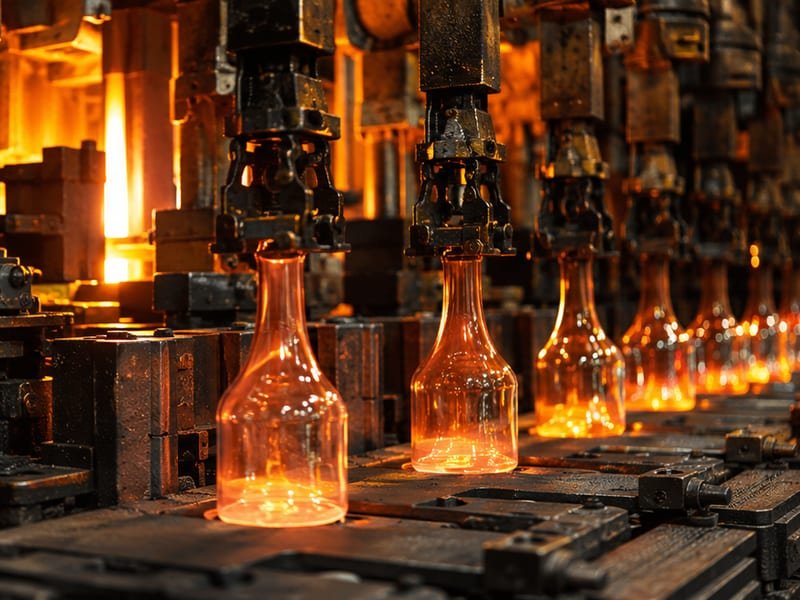
Clear, high-transmission glass is the entire commercial value proposition of most flat, container, and specialty glass products — a batch that comes out with a visible green, brown, or yellow tint, or with a hazy, low-clarity appearance, is typically downgraded or rejected outright, which makes transparency one of the most commercially consequential quality parameters a furnace operator has to control.
Root Causes
The best-documented cause is trace iron oxide (Fe₂O₃) carried into the furnace batch as an impurity in the silica sand. Iron is the single most potent colorant in soda-lime-silica glass: even hundredths of a percent by weight are enough to produce a visible green or brown tint, an effect that becomes more pronounced as the glass gets thicker, since more colored material means more light absorbed along the path length. Chromium behaves similarly at even lower concentrations, producing a green cast, while titanium contributes yellow discoloration and can increase opacity. These colorants absorb specific wavelengths in the visible spectrum rather than transmitting them evenly, which is what the human eye reads as a tint rather than true colorlessness.
A second, distinct cause is optical rather than chemical: refractory mineral inclusions — dense particles like zircon or chromite that either enter with the batch or shed from furnace refractory linings — scatter light locally and show up as visible stones or specks rather than an overall tint (see the related “Black Specks and Contamination” article for the furnace-side version of this mechanism).
Process conditions matter too. Incomplete homogenization or fining can leave compositional striae (“cord”) in the glass that bend light differently from the surrounding matrix, reducing perceived clarity even when the bulk chemistry is within spec. The melt’s redox state also affects how strongly a given iron content colors the glass, since iron’s two oxidation states (Fe²⁺ and Fe³⁺) absorb light differently.
What This Means for Raw Material Selection
Because iron oxide is overwhelmingly the dominant colorant risk, and it enters the furnace primarily through the silica sand — the largest single ingredient in any glass batch by weight — sand purity is the first and most consequential specification decision for a glass producer chasing transparency. This is exactly why glass-grade silica sand is tested to its own dedicated standard, ASTM C146, rather than treated as ordinary sand: buyers need a reliable, repeatable chemical analysis of iron and other colorant oxides before the sand is committed to a furnace charge, not after a tinted batch has already been produced.
There is no single universal iron ceiling that applies to every product — the acceptable level depends on the glass’s end use and section thickness (a thin container tolerates more iron than a thick optical or architectural piece), so the right specification is one set against the buyer’s own product requirements rather than assumed from a generic “glass sand” label. What raw material selection can control is getting a verified, consistent Fe₂O₃ figure for each sand lot; what it cannot control on its own is furnace homogenization, fining time, and redox management, which remain process-side responsibilities even when the sand itself is fully in spec.
Sources: ASTM C146 (Standard Test Methods for Chemical Analysis of Glass Sand); general glass-science literature on iron, chromium, and titanium as colorant oxides in soda-lime-silica glass; industry technical references on refractory-derived heavy mineral inclusions (zircon, chromite) as a distinct optical defect mechanism.