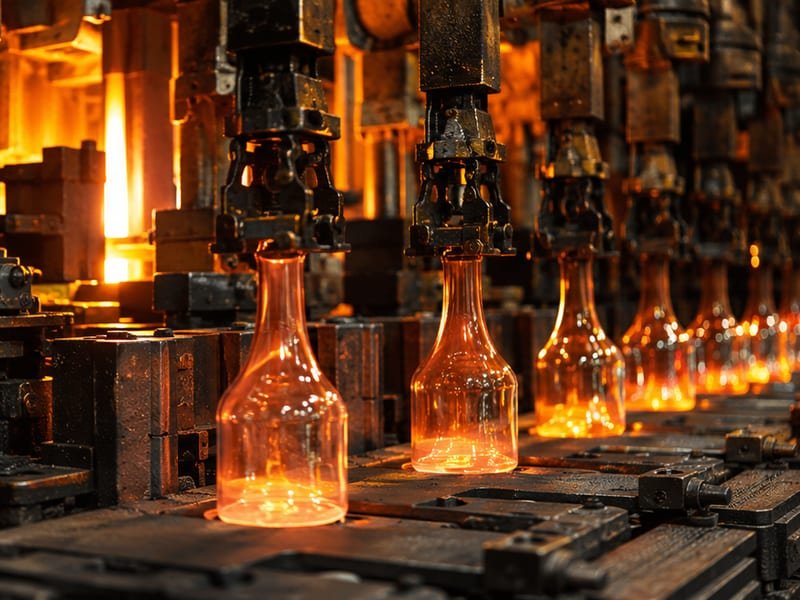
Dark specks and “stones” — small, visually obvious dense inclusions in otherwise clear glass — are an immediate reject trigger in flat and container glass, and because some of these inclusions are also documented sources of localized mechanical weakness, they can be a downstream durability concern, not just a cosmetic one.
Root Causes
The most commonly documented industrial cause is refractory wear inside the furnace itself. Furnace linings made from materials like chromite-bearing refractories or AZS (alumina-zirconia-silica) refractories can shed particles into the melt as they erode at contact and high-wear zones; chromite fragments in particular show up as dense, visibly dark specks in the finished glass, and AZS wear contributes its own zirconia-silica grain defects. Analysis of these inclusions (commonly using energy-dispersive X-ray spectroscopy) is a standard way glass technologists distinguish a refractory-sourced speck from other contamination.
A second, distinct cause is unmolten or incompletely reacted batch material — grains of raw material that failed to fully dissolve during melting and remain as solid inclusions in the finished glass, rather than particles introduced from outside the batch.
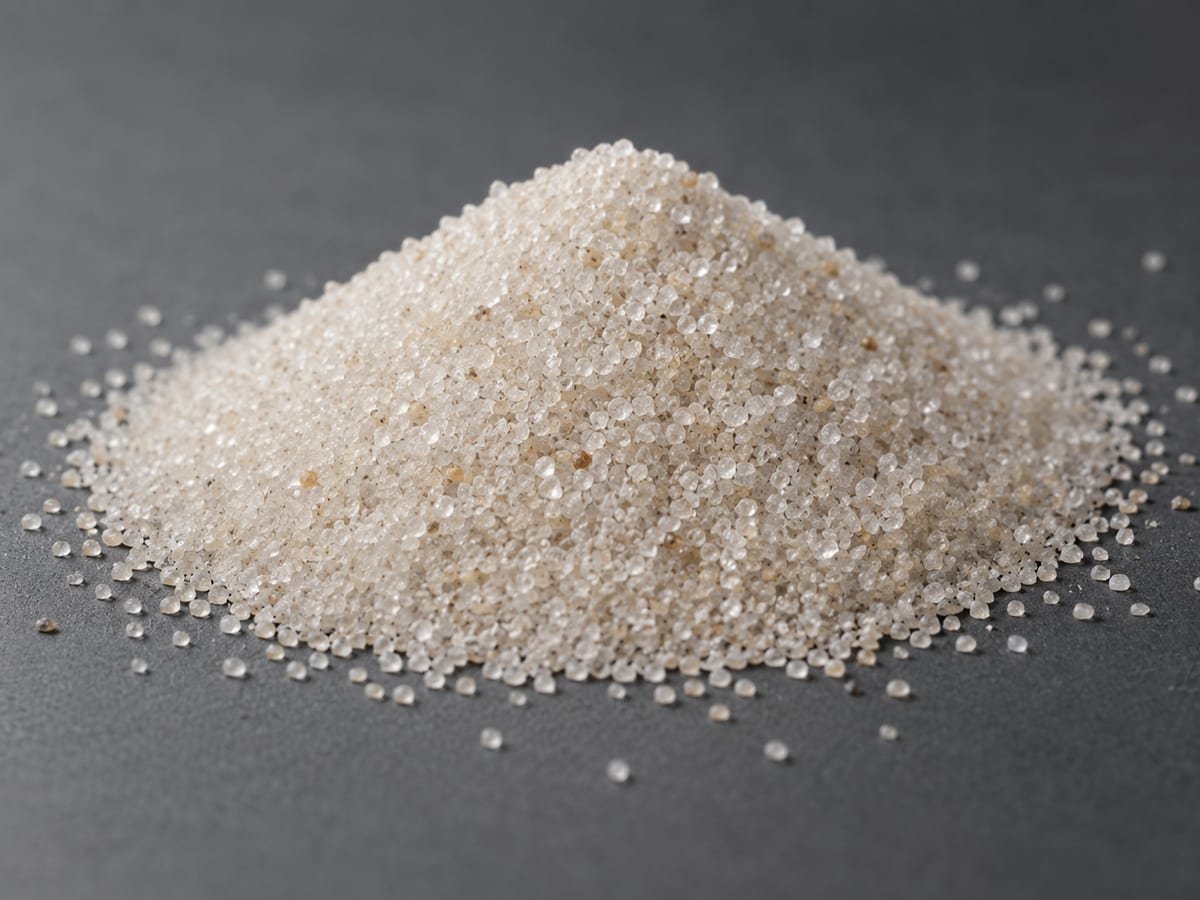
A third, raw-material-side cause is heavy mineral content naturally present in silica sand deposits before beneficiation. Chromite and zircon are dense accessory minerals that occur alongside quartz in many sand deposits, and where they aren’t fully removed, they behave the same way refractory-derived chromite does: as unmolten, visibly dense specks scattered through the glass. Chromium is a documented potent colorant even at trace levels, so chromite contamination from this source can also produce localized discoloration alongside the physical speck.
What This Means for Raw Material Selection
Furnace refractory selection and maintenance remain the dominant, largest-scale cause of this defect industry-wide, and no raw material specification substitutes for proper refractory management. But heavy mineral content is a genuine, testable, and controllable parameter on the silica sand side specifically. Suppliers reduce it through beneficiation — sequential gravity separation, magnetic separation, and froth flotation are documented methods for stripping chromite, zircon, and similar heavy minerals out of raw sand before it’s sold as glass-grade material. Some premium glass applications (photovoltaic-grade quartz sand is one documented example) specify a maximum total heavy-mineral content in the low single-digit parts-per-million range, expressed as Cr₂O₃ equivalent, with a cap on individual particle size as well.
There’s no single heavy-mineral ceiling that applies to every glass product — the appropriate limit depends on how visually critical the end application is — but the practical guidance for a buyer chasing fewer speck-related rejects is to treat heavy mineral content as its own line item in a silica sand specification, separate from the SiO₂/Fe₂O₃ figures used for transparency, and to confirm the supplier’s beneficiation process actually targets it rather than assuming general “washed” sand has already addressed it.
Sources: peer-reviewed and industry technical literature on glass melting furnace refractories and refractory-related defects (chromite, AZS wear); container-glass crystal-inclusion defect analysis literature; industry technical references on silica sand beneficiation (gravity, magnetic, froth flotation separation) and heavy-mineral (chromite, zircon) specification limits for premium glass-grade sand.