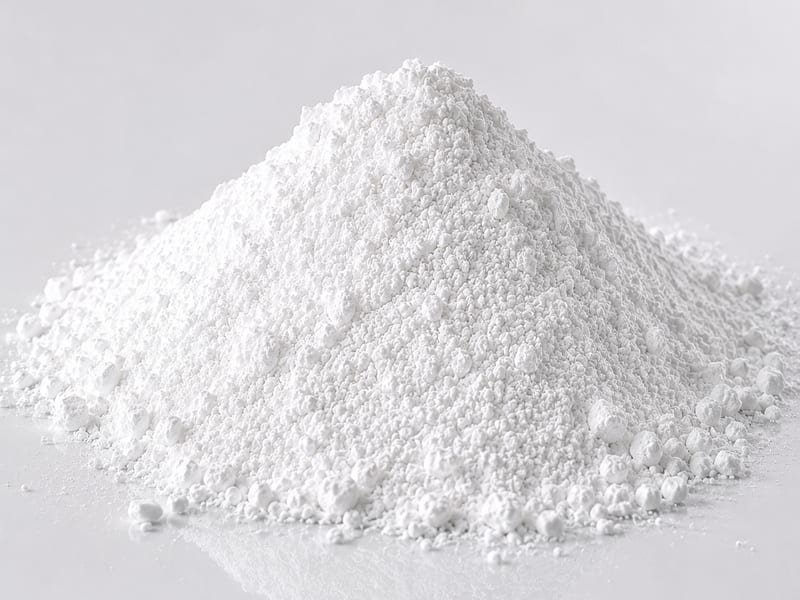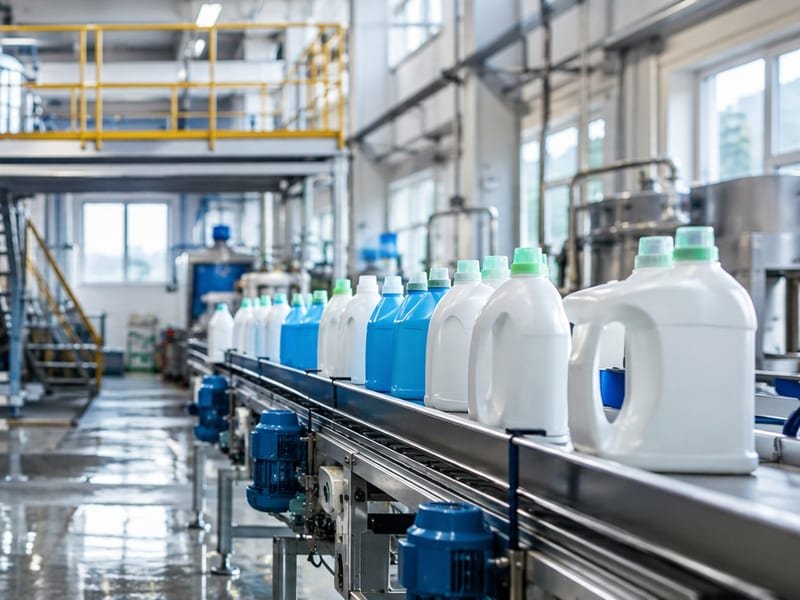
Soda ash (sodium carbonate) works as a builder and alkalinity source in detergent formulations, but a shipment that’s technically 99%+ Na₂CO₃ can still cause visible formulation problems if its iron content, grade, or particle characteristics don’t match what detergent manufacturing actually requires — “soda ash” is not a single interchangeable commodity once purity requirements get specific.
Root Causes
Detergent-grade soda ash carries tighter impurity limits than general industrial soda ash, precisely because trace impurities that don’t matter in bulk applications like glass manufacturing can visibly interfere with detergent performance and appearance. Industry specifications for high-purity soda ash commonly call for a minimum of roughly 99.2% sodium carbonate content, with iron held to a documented standard range of roughly 10-20 ppm for general high-purity grades — and specialized low-iron grades pushing iron content down to roughly 0.002% Fe or lower where formulation sensitivity demands it. Iron matters specifically because even trace iron can catalyze discoloration or interact with other formulation components in ways that are visually or functionally noticeable in a finished detergent product, unlike in less sensitive industrial uses of the same base chemical.
Grade selection is a second, independent variable. Soda ash is commercially available as light grade (finer particle structure, higher reactivity, and documented superior blending properties) or dense grade (coarser, denser particles), and detergent and chemical manufacturing specifically favor the light grade for its reactivity and blending characteristics in powder and liquid formulations. Choosing the wrong grade — dense soda ash where light grade’s blending behavior was assumed, for example — can affect formulation uniformity independent of whether the chemical purity specification was met.
What This Means for Raw Material Selection
Because iron content and grade both affect detergent performance in ways that a generic “sodium carbonate purity” number doesn’t capture, sourcing soda ash for detergent manufacturing requires a specification built around the certificate of analysis in full, not just the headline assay percentage. Documented sourcing guidance for detergent-grade soda ash at scale calls for a certificate of analysis covering assay, moisture, insolubles, chloride, sulfate, and iron/trace metals together, along with bulk density range and particle size distribution — because any one of these variables can drift independently of the others even from a supplier whose nominal purity looks consistent.
For a buyer, the practical specification points are: confirm the iron content standard the supplier’s grade is held to (general high-purity versus specialized low-iron) against the formulation’s actual sensitivity, rather than assuming any “high-purity” soda ash meets a detergent-specific iron threshold; confirm light versus dense grade matches the formulation’s blending and reactivity requirements; and request the full certificate of analysis, including trace metals and particle size data, rather than relying on assay percentage alone as proof of detergent-grade suitability.
Sources: general soda ash industry technical and supplier documentation on detergent-grade specifications, iron content standards, and light versus dense grade characteristics (industrial chemical supplier technical references); general detergent manufacturing literature on soda ash quality control and certificate-of-analysis requirements at production scale.