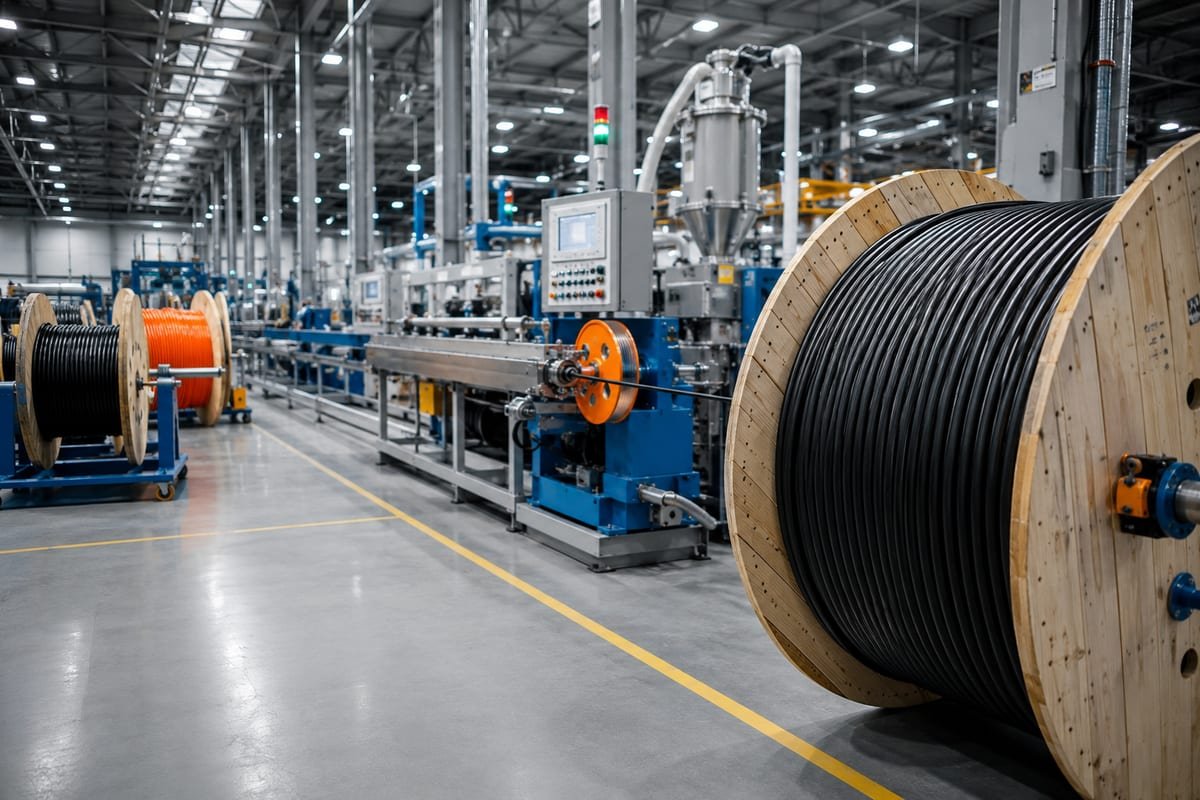
An outdoor cable jacket that looks fine at installation can turn brittle and crack within a season if its UV protection dosage was set below the level that actually works — because carbon black’s protective effect isn’t proportional across any dosage, it depends on reaching a documented threshold concentration.
Root Causes
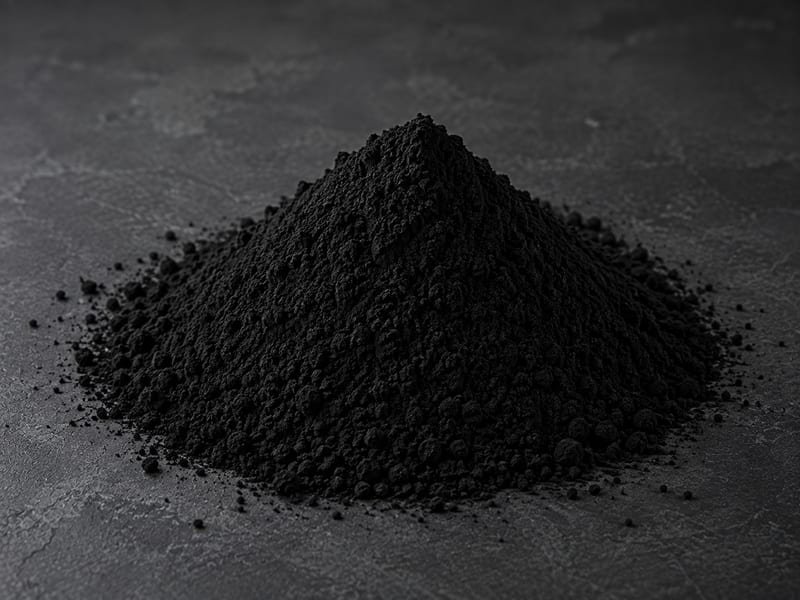
Ultraviolet radiation degrades polyolefin cable jackets through photodegradation — UV photons break polymer bonds at the surface, and the cumulative effect of that bond-breaking, compounded by heat, moisture, and temperature cycling, is what turns a flexible jacket brittle over time. Carbon black is documented as one of the most durable UV stabilizers available for this purpose: it is chemically inert, thermally stable, and essentially immune to photodegradation itself, which is why it protects the surrounding polymer rather than degrading alongside it. When properly dispersed, carbon black particles form a continuous protective layer that absorbs incoming UV light and converts it to harmless heat, physically blocking UV penetration into the polymer matrix rather than chemically reacting with it.
Documented dosage data shows this protection is threshold-dependent, not linearly proportional to loading: a cable is generally considered fully UV-stabilized at approximately 2% carbon black content, though concentrations around 0.5% are documented as typically sufficient to provide effective protection in practice. This means there’s a meaningful gap between the level commonly cited as fully protective and the lower level that still performs adequately for many applications — a real specification decision, not a single fixed number that applies uniformly regardless of expected service conditions or exposure severity.
What This Means for Raw Material Selection
Because UV protection depends on carbon black reaching an effective concentration and being evenly dispersed throughout the compound, a jacket compound with carbon black present but below the effective threshold, or unevenly dispersed despite adequate nominal loading, offers materially less real-world UV protection than a compound at documented effective dosage with confirmed dispersion. Two compounds with the same nominal carbon black percentage can perform differently in outdoor service if dispersion quality differs, since UV protection is a surface-coverage effect that depends on the carbon black actually forming a continuous protective network rather than clumping.
For a buyer specifying carbon black for outdoor or long-service-life cable jacketing, the practical points are: confirm the carbon black loading level against the documented effective range (roughly 0.5-2% depending on required protection level and exposure severity) rather than accepting an unspecified “UV-stabilized” claim; request dispersion verification, not just nominal loading percentage, since poor dispersion undermines the protective effect even at adequate dosage; and size the dosage to the actual expected exposure severity and required service life, since a jacket rated for a shorter indoor-adjacent application doesn’t need the same loading as one specified for extended, high-UV outdoor exposure.
Sources: general polymer science literature on UV photodegradation mechanisms in polyolefins; industry technical references on carbon black as a UV stabilizer for cable jacketing and outdoor polymer applications (documented dosage thresholds for full versus adequate UV stabilization); peer-reviewed research on carbon black effects on UV stability in polyolefin films under artificial weathering conditions.