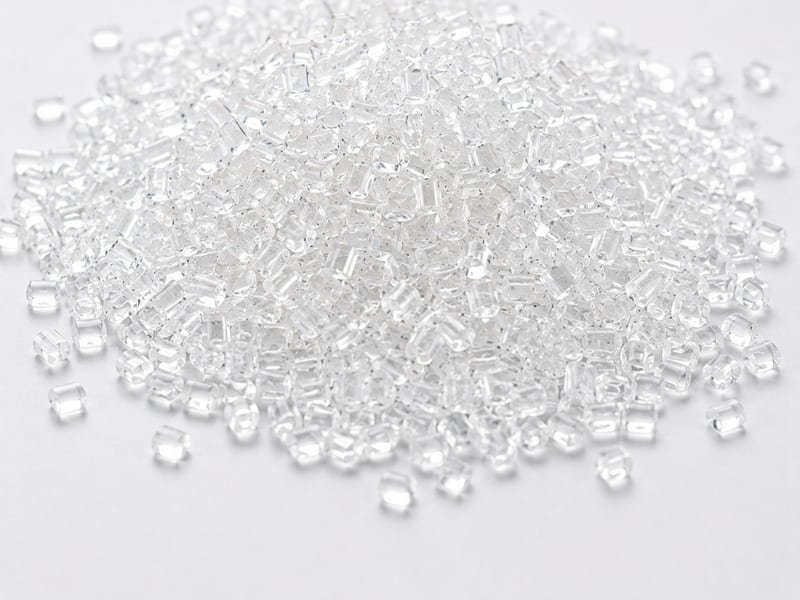

PET is bought for bottles, fibre and sheet, and the grade that suits one of these will not suit another. The most common specification gap in a PET quotation is the missing intrinsic viscosity and the method it was measured by. This checklist is written for converters and importers in Saudi Arabia and the wider GCC who want to compare suppliers on facts before asking for a price.
This is a buyer’s reference, not a PLAXRAW product specification. The material is described on the PET reference page. PLAXRAW does not publish prices or stock on this page; to discuss a requirement use the quotation request form, and any grade, availability and price are confirmed in writing for your enquiry.
Step 1: Fix the application before the grade
- Bottles and containers: the grade designated for bottle use, its IV, and any food-contact documentation.
- Fibre and yarn: IV and consistency drive spinning behaviour; see PET intrinsic viscosity and fibre quality.
- Sheet and film: the producer’s sheet or film designation and drying requirements.
State the use first; PET data sheets are written per application, and a price target alone does not identify a grade.
Step 2: Specify the product, not just the name
| Item | What to ask for | Why it matters |
|---|---|---|
| Application grade | Bottle, fibre or sheet designation with the producer grade name | Grades are tuned for the process and end use. |
| Intrinsic viscosity | IV value with the method (for example ASTM D4603) | Indicates molecular weight; comparable only by the same method. |
| Moisture and drying | Moisture on delivery and the producer's drying guidance | PET must be dried before melt processing, and moisture affects quality. |
| Colour | Colour values as reported by the producer, with the method | Matters for clear or white products. |
| Process by-products | Whether the producer reports acetaldehyde or similar figures relevant to your product | Relevant to taste-sensitive bottle uses. |
| Regulatory fit | SDS and the food-contact declaration for your market (for example references such as 21 CFR 177.1630 in the US) | Food-contact suitability is document- and market-specific. |
Step 3: Ask for the documents that prove it
Request the current technical data sheet (TDS) and safety data sheet (SDS) for the exact grade and a certificate of analysis (COA) per shipment where issued, reporting IV and moisture. Compare a sample from the commercial production route against your control resin in your own process, and keep retained samples. Raw-material cost background: PTA and MEG feedstock chain.
Step 4: Fix the commercial terms
-
Packaging: 25 kg bags, big bags or bulk, with moisture protection.
-
Quantity and timing: trial quantity, regular volume and delivery window.
-
Delivery term: state the Incoterms 2020 term you want quoted so offers are comparable.
-
Import requirements: confirm with your customs broker which conformity and customs documents apply to your product in Saudi Arabia or the destination country before shipment.
Compare offers by landed cost per usable unit, including freight and trial cost, not by the ex-works figure alone.
Enquiry template
- Use (bottle, fibre, sheet) and the process.
- IV needed, or “open to recommendation”.
- Colour, moisture and food-contact requirements.
- Required documents (TDS, SDS, COA, any declaration).
- Trial quantity and regular volume.
- Packaging, delivery place and Incoterms term.
Send it through the PLAXRAW quotation form. PLAXRAW reviews it and replies with the relevant questions or options; it does not promise stock, specifications or lead times before the details are confirmed.
Related reading
- PET Intrinsic Viscosity and Fiber Quality in Spinning
- PTA and MEG: The PET Feedstock Chain and Cost Drivers
- PET-to-Cotton Blend Ratio and Yarn Uniformity
Sources and editorial scope
Prepared by the PLAXRAW editorial team on 15 October 2026. This is editorial buying guidance, not PLAXRAW laboratory data, and it contains no price, stock or lead-time commitment. Standards are named so you can ask a supplier which method applies; consult the current edition of each standard for its scope.
- ASTM D4603 — Standard Test Method for Determining Inherent Viscosity of Poly(Ethylene Terephthalate) (PET) by Glass Capillary Viscometer.
- US FDA — 21 CFR 177.1630, Polyethylene phthalate polymers (a US reference; check the rule of your own market).
- ICC — Incoterms 2020.
Content updated: