A part that shrinks by an acceptable overall percentage can still warp badly coming out of the mold — because warping isn’t caused by how much a part shrinks, it’s caused by different regions of the same part shrinking by different amounts or in different directions, creating internal stresses that bend, twist, or bow the finished piece.
Root Causes
Shrinkage happens as a molten polymer cools and solidifies in the mold cavity; warping happens when that shrinkage isn’t uniform. Nonuniform wall thickness, uneven mold cooling, and molecular/fiber orientation effects from how the melt flowed into the cavity are all documented root causes of the residual stresses and cooling imbalances that produce warpage — a part can meet its target shrinkage percentage on average and still warp if shrinkage varies by direction or by region within the same part.
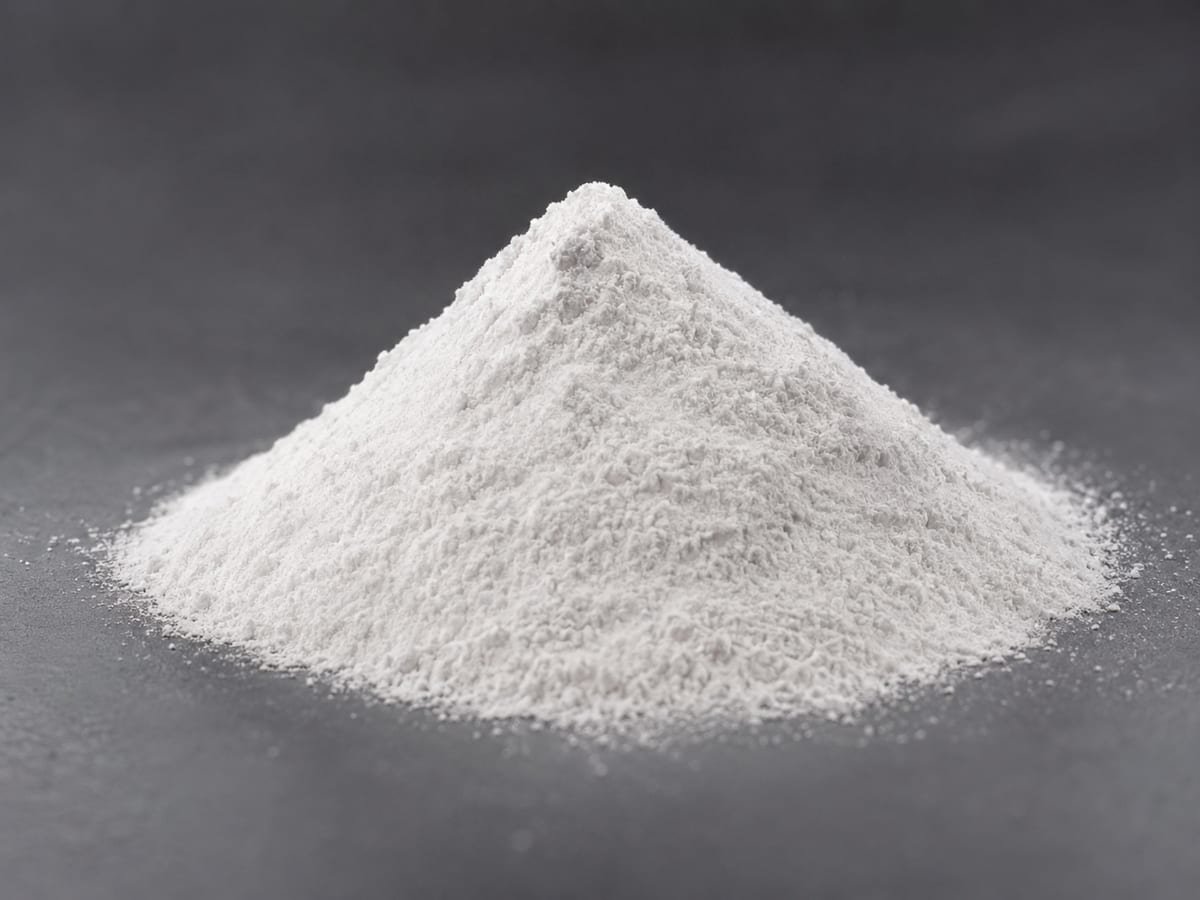
Filler content changes this picture directly, and not always in a straightforward way. Reinforcing fillers such as talc reduce shrinkage by constraining how much the surrounding polymer matrix can contract as it cools — one documented example reports that adding 20% talc filler to polypropylene reduces shrinkage to roughly 0.8-1.2% (down from unfilled PP’s higher baseline shrinkage) and significantly improves shrinkage isotropy (uniformity across directions), cutting warpage risk by roughly half. But filler-driven shrinkage reduction is not automatically warpage-free: fiber-type fillers in particular can produce more differential shrinkage along versus across the fiber orientation even while reducing overall shrinkage, and any filler — fibrous or platy, like talc — has to be uniformly dispersed throughout the part, since regions with uneven filler distribution will shrink at different rates from each other and twist along the resulting stress gradient.
What This Means for Raw Material Selection
Because filler loading affects both the magnitude and the directional uniformity of shrinkage, talc content is a genuine design lever against warpage, not just a cost or stiffness additive — but only if dispersion is actually uniform throughout the part. A compound that meets its nominal talc loading on a certificate of analysis can still produce warped parts if the filler isn’t evenly distributed during compounding or if mold design and gate placement cause the melt to orient the filler unevenly as it fills the cavity.
For a buyer specifying a talc-filled polypropylene or similar compound for a warp-sensitive application, the practical implications are: talc loading should be selected against the part’s actual shrinkage and warpage tolerance, not a generic “add filler to reduce shrinkage” assumption, since higher loading doesn’t uniformly reduce warpage risk if directional shrinkage isn’t also controlled; talc particle size and grade affect dispersion quality and should be matched to the processing equipment and part geometry in use; and warpage troubleshooting on an actual part should look at wall thickness uniformity, cooling, and mold/gate design alongside filler content, rather than assuming a shrinkage or warpage problem is automatically fixable by raising or lowering talc percentage alone.
Sources: Plastics Technology, “Injection Molding: The Causes of Warpage”; Fictiv, “Warping in Injection Molding: Causes, Prevention, and Troubleshooting Guide”; general injection molding and plastics compounding literature on filler effects (talc, glass fiber) on shrinkage magnitude, isotropy, and warpage risk in polypropylene and related polyolefins.