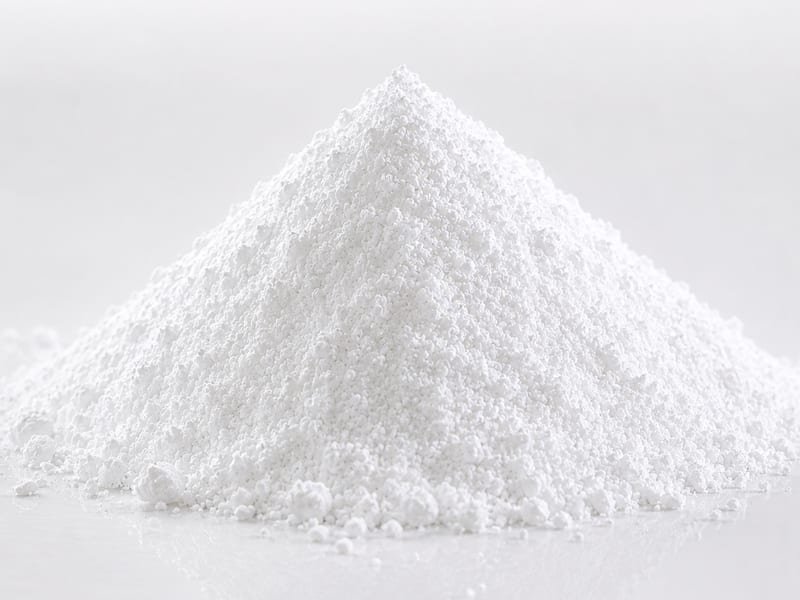
Titanium dioxide (TiO₂) is the workhorse white pigment across paints, coatings, and printing inks, and buyers in both sectors face the same underlying problem: TiO₂ pricing swings more, and more unpredictably, than most other pigments they specify. That volatility traces back to structural features of how TiO₂ is actually made, not to formulation choices a buyer controls.
Root Causes
TiO₂ pigment production starts from titanium mineral feedstocks — primarily ilmenite and higher-grade titanium slag or rutile — that are geographically concentrated in a small number of producing regions, and the pigment itself is manufactured by a small number of large producers globally. This combination means TiO₂ pricing is exposed to feedstock mining and beneficiation economics well upstream of the pigment plant, not just supply and demand for the finished pigment.
The dominant production route, the sulfate process, reacts titanium feedstock with sulfuric acid, which ties TiO₂ production cost directly to sulfuric acid and, by extension, to sulfur supply and pricing — a linkage that is normally a background cost factor but that has been documented to spike sharply during periods of sulfur supply disruption, since sulfur is itself a byproduct of oil and gas refining and its supply is affected by conditions in that sector independent of pigment demand. The alternative chloride process avoids some of this exposure but has its own feedstock-purity and capital-cost constraints that limit how much production can shift toward it in response to a sulfuric acid cost spike. Industry price-tracking sources have documented periods where TiO₂ prices rose largely on raw material cost pressure — rising ilmenite, titanium slag, and sulfuric acid costs — even while downstream demand from paints, coatings, and inks was flat or soft, illustrating that TiO₂ price movement is frequently a feedstock-side story rather than a demand-side one.
Producer concentration compounds the effect: because a limited number of large-scale producers supply most of the global market, planned or unplanned output changes at a small number of facilities can move regional pricing and availability noticeably, in a way that would be diluted across a more fragmented supplier base for other pigments.
What This Means for Raw Material Selection
Because TiO₂ price volatility originates upstream in feedstock and process chemistry, negotiating strategy that treats TiO₂ purely as a formulation line item to source at the lowest quoted price misses where the actual risk sits. The more useful diligence question for a buyer is which feedstock and process route a given supplier relies on (sulfate or chloride, and which feedstock grade), since that determines the supplier’s own cost exposure and, indirectly, how their pricing is likely to move when sulfuric acid or feedstock costs shift.
For paint, coating, and ink formulators alike, the practical response is the same regardless of end application: build supply agreements around index-linked or feedstock-referenced pricing mechanisms rather than fixed prices that both sides will eventually need to renegotiate, qualify more than one TiO₂ supplier where formulation allows, and treat TiO₂ loading optimization (getting full hiding and opacity value from the TiO₂ that is used, rather than over-formulating against volatile pricing) as a genuine cost-management lever independent of who the pigment is sourced from. Because both paint/coatings and printing ink formulations depend on TiO₂ for the same underlying reason — opacity and whiteness — the price-volatility exposure and the sourcing response are effectively identical across both industries, even though the finished products differ.
Sources: general pigment industry literature on TiO₂ manufacturing routes (sulfate process vs. chloride process) and feedstock dependency (ilmenite, titanium slag, rutile); industry price-tracking and market analysis sources (ChemAnalyst, IMARC Group, Expert Market Research) documenting periods of TiO₂ price movement driven by raw material and sulfuric acid cost pressure independent of downstream demand; general commodity-chemical literature on producer concentration effects on pigment market pricing.