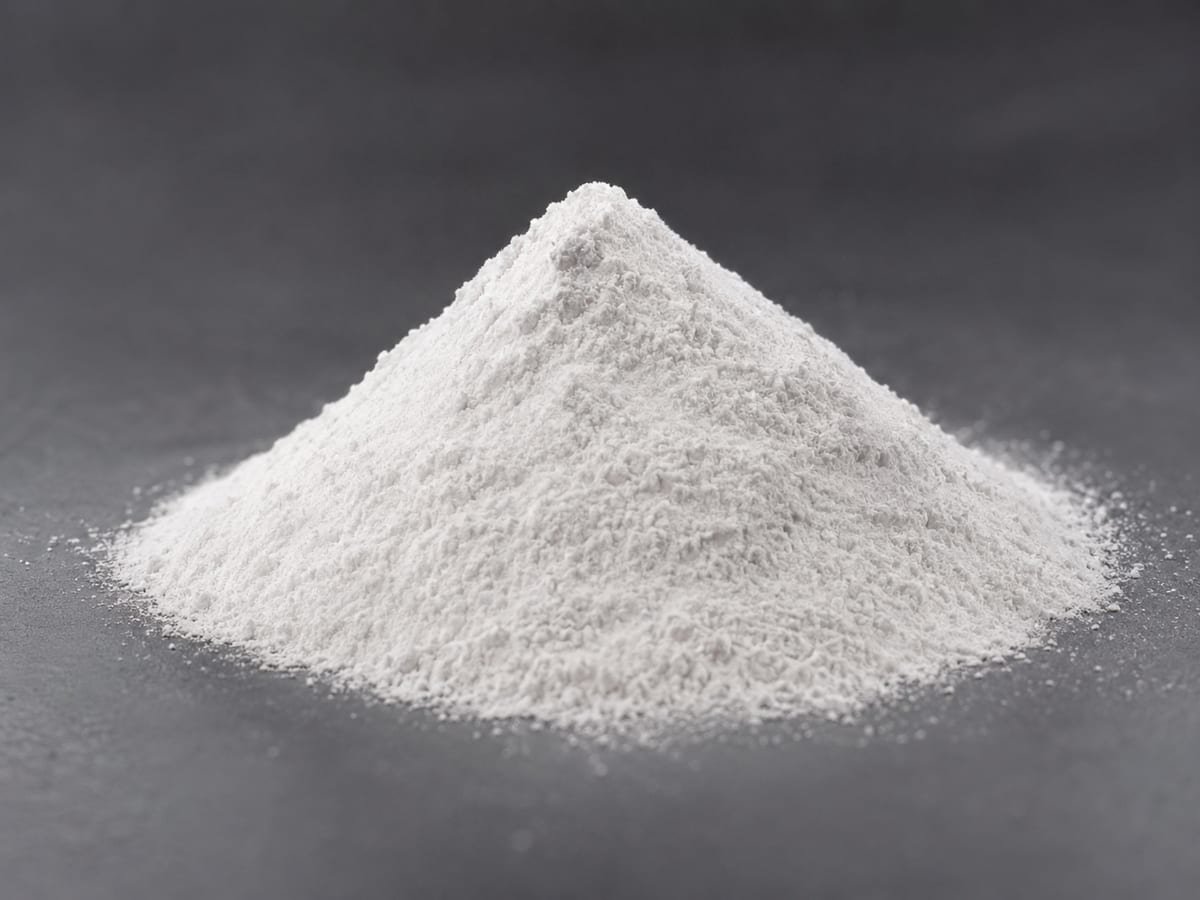
Two extender shipments both labeled “calcium carbonate” or “talc” can produce visibly different sheen and hiding in the finished paint — not because either is contaminated in an obvious way, but because particle size, particle shape, and optical purity vary between suppliers in ways that directly change how the extender behaves in the film.
Root Causes
Calcium carbonate is documented as the most widely used extender pigment, valued as a bright, inexpensive way to increase bulk, lower cost relative to TiO2, and control rheology and gloss level — but it’s available across many grades that vary in average particle size and particle size distribution, and that variation is documented as significantly affecting the gloss, hiding power, and viscosity of the finished paint, with finer particle size and higher refractive index grades specifically contributing to improved hiding power and gloss.
Talc behaves differently from calcium carbonate because of a structural difference, not just a compositional one: talc’s platy particle shape gives it a slippery, soft feel and a subtle matte finish, while calcium carbonate’s more granular structure adds opacity and tooth (surface texture) — meaning talc is the better choice for smooth, waxy, or low-sheen effects while calcium carbonate suits applications needing more absorbency and film texture. Purity is a separate axis from particle size: impurities or compositional variation in calcium carbonate are documented as directly impacting the overall performance and appearance of glossy paint formulations, which is why finely controlled particle size distribution curves combined with high optical purity for whiteness and opacity are cited as the key specifications for a glossy-grade extender.
What This Means for Raw Material Selection
Because gloss and hiding depend on particle size distribution and optical purity, not just the extender’s chemical identity, a buyer who qualifies “calcium carbonate” or “talc” as a generic material name without pinning down grade-specific particle size data risks a sheen shift when switching suppliers even though the material passes a basic composition check.
The practical points for a buyer are: specify particle size distribution and optical purity (whiteness, refractive index contribution) as explicit parameters for gloss-sensitive formulations, not just the extender’s chemical name, since these are the documented levers that actually control appearance; choose between talc and calcium carbonate based on the platy-versus-granular particle geometry the application needs, not interchangeably, since talc’s matte/low-sheen character and calcium carbonate’s opacity/texture character come from fundamentally different particle shapes; and requalify extender grade whenever switching suppliers for a gloss-critical formulation, since two materials with the same name and similar bulk composition can still carry different particle size distributions that shift the finished sheen.
Sources: NBInno technical article on the role of calcium carbonate as a pigment extender in coatings; LinkedIn technical pulse article on calcium carbonate for glossy paint grade; Natural Pigments technical reference on extender pigments and talc for grounds and paints; Calmit technical literature on precipitated calcium carbonate (PCC) fillers and whiteness for paints and varnishes.