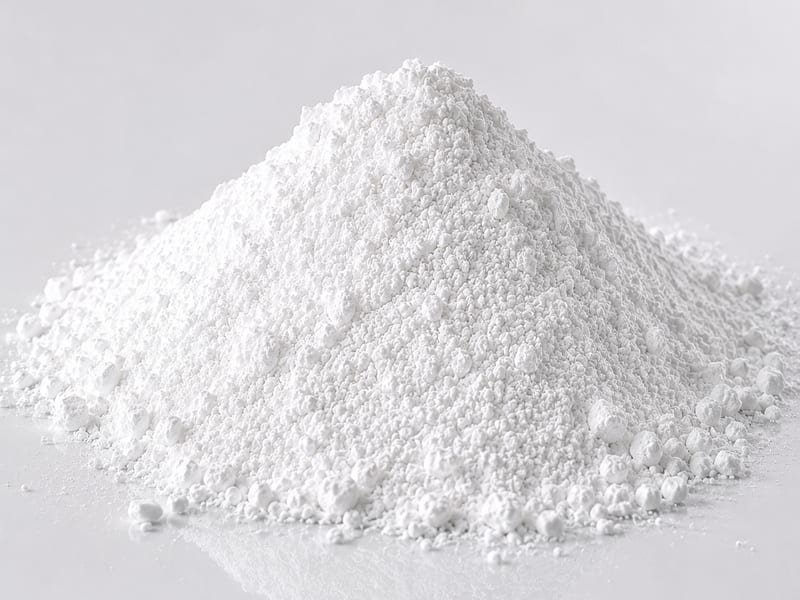
Light and dense soda ash aren’t just two package sizes of the same chemical — they’re documented as dissolving at meaningfully different rates because of their particle size, and that difference changes how quickly a wash cycle’s pH actually rises.
Root Causes
The dissolution difference between soda ash grades is quantified directly: dense sodium carbonate, with a documented particle size around 431 microns, shows a 90% dissolution time of 34 seconds, while light sodium carbonate, at a documented particle size around 138 microns, dissolves 90% in just 6 seconds — nearly a six-fold difference in dissolution speed tied directly to the roughly three-fold difference in particle size between the two grades. This isn’t a minor processing detail; it directly shapes wash chemistry behavior: light soda ash’s fine particles dissolve quickly and produce a sudden pH jump, while heavy (dense) soda ash’s coarser granules dissolve more gradually, holding the wash pH in the roughly 10.5-11.5 range for a longer period rather than spiking and leveling off.
Cold water compounds the dissolution challenge documented for detergent granules generally, particularly for formulations carrying a high level of nonionic surfactant or linear alkyl benzene sulfonate — meaning particle size selection matters more, not less, in cold-wash-designed products where the thermal energy that would otherwise speed dissolution isn’t available. Formulation-level constraints also apply: the combined level of sodium sulphate and sodium carbonate in detergent slurry is documented as generally held under 20% by weight of the final product, with each individual salt typically capped around 5% in specific formulation guidance — meaning particle size selection operates within a defined dosage ceiling, not as an unlimited lever.
What This Means for Raw Material Selection
Because light and dense soda ash grades produce genuinely different pH-release profiles rather than just different handling characteristics, grade selection is a formulation decision tied to wash performance, not a packaging or logistics choice made independently of how the product needs to perform in the machine.
The practical points for a buyer are: select light soda ash specifically when a fast, early pH lift is the formulation goal, given its documented ~6-second 90% dissolution time versus dense grade’s ~34 seconds; choose dense (heavy) soda ash when sustained pH in the 10.5-11.5 range over a longer wash duration is the target, since its slower dissolution is what produces that extended-release behavior rather than a quick spike; and prioritize dissolution-rate verification specifically for cold-water-formulated products, since the documented cold-water dissolution challenge for surfactant-heavy granules means particle size choice has outsized impact exactly where thermal assistance is weakest.
Sources: Elchemy and STPP Group technical guides comparing soda ash light versus dense grades for industrial applications; JRJ Elementix technical article on sodium carbonate’s function in detergents covering pH control and softening; USPTO patent literature on powder detergent compositions for cold water laundering and disintegrant-impregnated detergent agglomerates documenting dissolution behavior and formulation dosage limits.