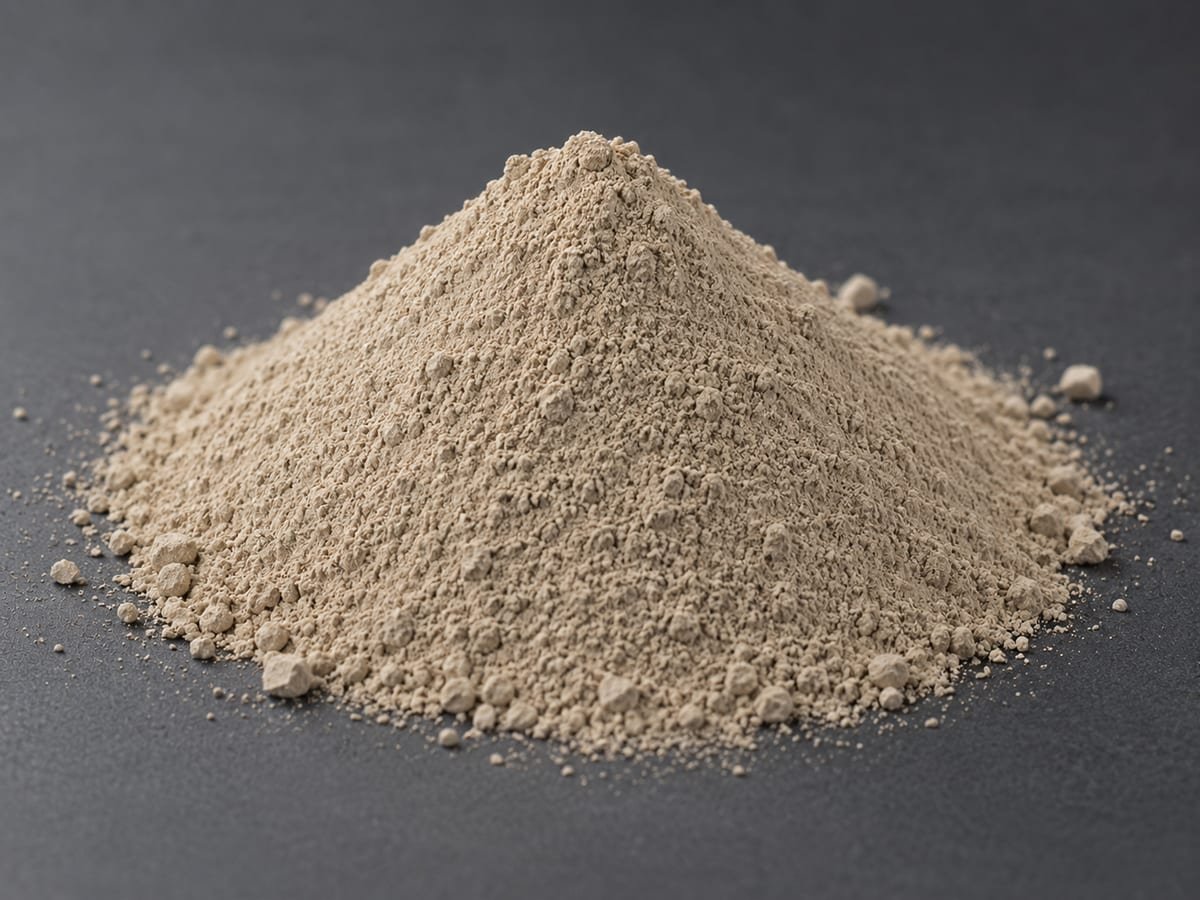
Bentonite that measured correctly on every chemical and swelling specification at the point of manufacture can still clump and resist flowing through a hopper by the time it reaches the rig — because moisture, absorbed during transport or storage, degrades handling performance independently of the mineral’s underlying quality.
Root Causes
Bentonite ore arrives from the deposit at a naturally high moisture content — commonly cited in the roughly 15-35% range — and processing reduces this substantially before the material is sold as drilling-grade product. Rotary drying is documented as the standard processing step, typically bringing moisture down to roughly 8-10%, with most bentonite products requiring drying to below 15% moisture as a baseline and drilling-grade powder specifically targeted below roughly 12% moisture content. That target exists because moisture directly governs flowability: absorbed moisture during storage or handling is documented to ruin flowability and consistency, producing clumping that makes the material difficult to feed through hoppers and eductors at the point of use — a physical handling failure distinct from any chemical or swelling deficiency.
This is a genuine post-manufacture risk, not just a processing-stage concern. API standards requiring controlled moisture levels exist specifically to protect long-term storage stability, because bentonite’s hygroscopic nature means correctly-dried material can reabsorb moisture from humid ambient air or damaged packaging well after it left the plant at spec. Standard handling guidance calls for bags to be stored dry and sealed for exactly this reason, and for material to be introduced into the mud system via hopper/eductor systems designed to control dust and feed rate — practices that address both the moisture-reabsorption risk and the separate handling hazard of fine mineral dust.
What This Means for Raw Material Selection
Because moisture content can drift after a shipment leaves the manufacturer at spec, a certificate of analysis showing compliant moisture at the point of production doesn’t guarantee the same moisture level — or the same flowability — by the time bagged bentonite reaches a remote rig after transport and interim storage. Storage and packaging conditions along that path are as consequential to usable flowability as the original drying process.
For a buyer, the practical points are: confirm moisture content is verified at receipt, not assumed from the mill certificate alone, particularly for shipments that traveled through humid transport routes or extended storage; specify sealed, moisture-resistant packaging and dry storage conditions as part of the purchase agreement rather than treating packaging as an afterthought to the chemical specification; and treat clumping or reduced flowability observed at the rig as a moisture-handling signal to investigate — storage conditions, packaging integrity, transit time — rather than assuming it reflects a defect in the bentonite’s underlying mineral quality.
Sources: general bentonite processing and drilling fluid industry technical literature on ore moisture content, rotary drying targets, and drilling-grade moisture specifications; API-referenced industry guidance on bentonite storage, handling, and moisture-related flowability; drilling fluid supplier technical documentation on hopper/eductor introduction and dust-control handling practices.