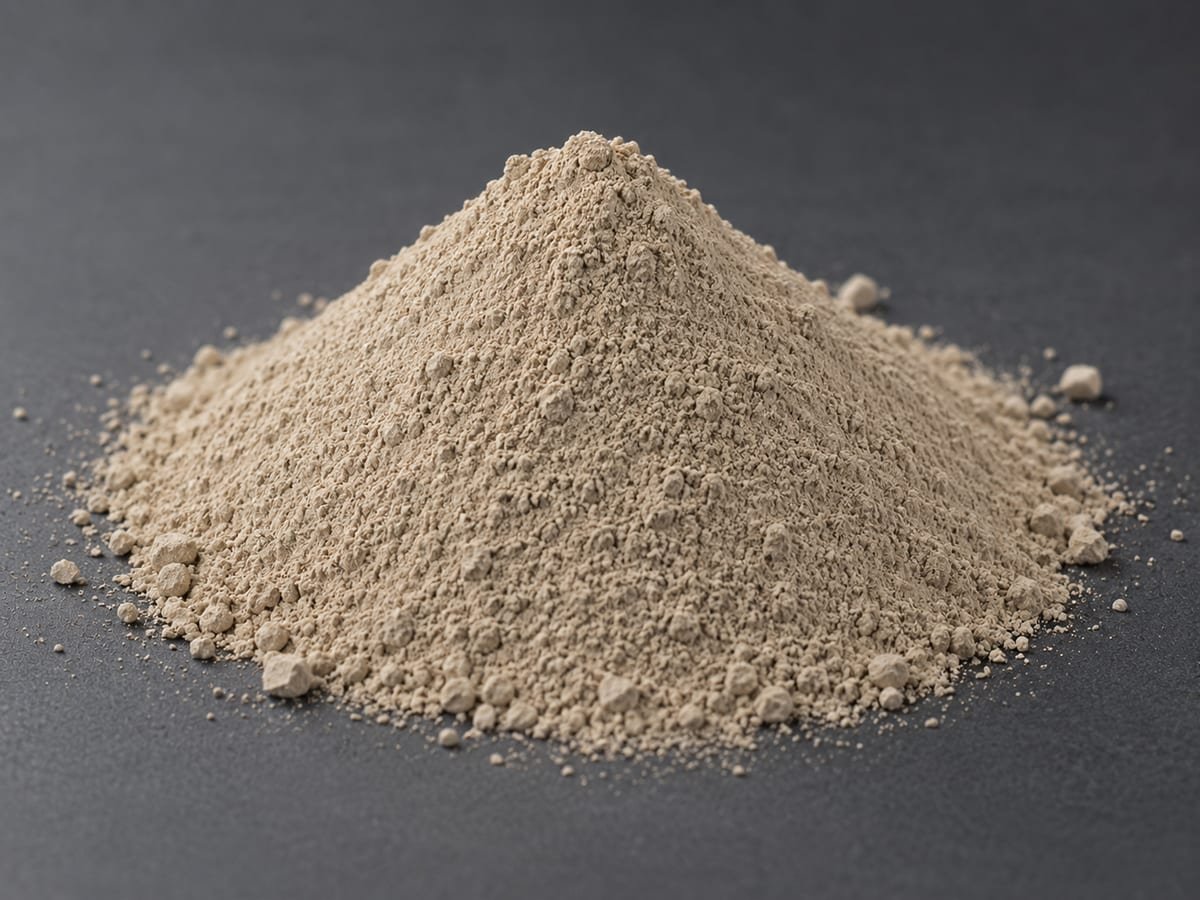
A bentonite mud system that behaves predictably at surface conditions can develop unmanageable viscosity and gel strength once it reaches a hot, deep wellbore — not because the bentonite failed, but because bentonite’s own thermal behavior changes at high temperature in a way ordinary formulation doesn’t anticipate.
Root Causes
Bentonite mud is documented to undergo temperature-induced flocculation and gelation under high-pressure, high-temperature (HPHT) conditions, an effect commonly observed above roughly 121°C (250°F). Flocculation causes bentonite platelets, normally dispersed to build controlled viscosity, to aggregate edge-to-face into a disordered network — the practical result is a fluid whose rheological properties shift undesirably at depth, undermining the fluid-loss control and hole-cleaning performance the mud was designed to deliver at surface temperature. Separately, bentonite is documented to become progressively inert and behave like ordinary drilled solids under high chloride-bearing salt contamination, a compounding factor in deep, high-salinity formations.
Maintaining bentonite in a deflocculated state — preventing the platelets from aggregating despite heat exposure — is documented as the key mechanism for holding acceptable rheological and fluid-loss properties in water-based HPHT fluids. This is why deflocculant chemistry, not just base bentonite quality, becomes a critical formulation variable as well depth and bottom-hole temperature increase: a bentonite that performs well in a shallow, low-temperature well can still require active deflocculant management to remain usable in a deep HPHT well, even at identical mud weight and nominal composition.
What This Means for Raw Material Selection
Because bentonite’s HPHT behavior is governed by flocculation chemistry, not simply “more or less bentonite,” specifying bentonite for a deep or high-temperature well requires planning for deflocculant compatibility from the start rather than treating it as a corrective measure applied after rheology drifts out of range downhole. Published operating envelopes illustrate where the practical limits sit: conventional water-based bentonite systems are documented in the roughly 12,000 psi / 300°F range, while oil-based systems extend further (up to roughly 18,000 psi / 446°F), and clay-free formulations have been developed specifically to avoid bentonite’s HPHT flocculation limitation altogether, with documented thermal stability up to around 200°C in some formulations.
For a buyer planning a deep or high-bottom-hole-temperature well, the practical questions are: confirm the well’s expected pressure and temperature envelope against the documented operating range of a bentonite-based system before committing to it, rather than assuming standard drilling-grade bentonite scales indefinitely with depth; plan deflocculant chemistry and dosing as part of the mud program design for HPHT sections, not as a reactive fix; and evaluate clay-free or oil-based alternatives specifically where the well’s temperature profile approaches or exceeds the documented flocculation threshold for bentonite systems, rather than pushing a water-based bentonite system past its demonstrated stability range.
Sources: peer-reviewed and industry research on HPHT drilling fluid formulation and bentonite thermal flocculation behavior (ScienceDirect); SPE (Society of Petroleum Engineers) technical resources on drilling HP/HT wells; peer-reviewed research on clay-free HPHT drilling fluid formulations and their thermal stability envelope; general drilling fluids engineering literature on deflocculant chemistry and rheological control at elevated temperature.