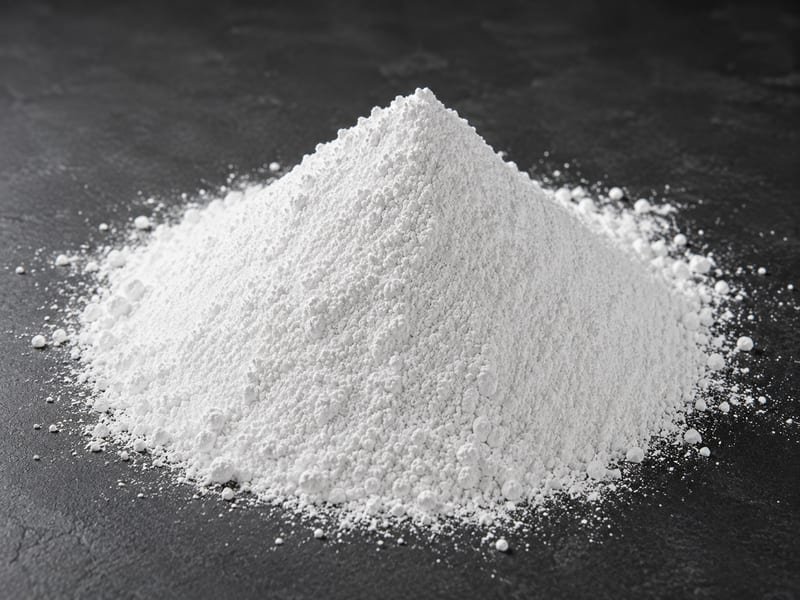
Mud weight — drilling fluid density, measured on-site with a mud balance and expressed in pounds per gallon — has to stay within a tight window to balance formation pressure without fracturing it, and barite is the standard weighting agent used to hit that target. But two barite shipments that both pass a purity assay can still deliver measurably different mud weight per unit added if their specific gravity or grind size differs.
Root Causes
Barite (barium sulfate, BaSO₄) is added specifically because it’s dense: pure BaSO₄ has a specific gravity of about 4.50, and API 13A drilling-grade barite is specified to a minimum specific gravity of 4.2, with typical commercial material carrying 90%+ BaSO₄ content. Because weighting performance depends on the mineral’s actual density, a barite source with specific gravity closer to the 4.2 floor delivers less density increase per unit weight added than a source running closer to the pure-mineral 4.50 figure, even if both clear a purity assay — impurities that reduce a shipment’s average specific gravity don’t necessarily show up as a failed BaSO₄ percentage test if they’re not tracked separately.
Grind size is a second, independent variable. API 13A specifies barite ground to roughly 3-74 microns, with approximately 97% passing a 200-mesh (75-micron) screen — a fineness standard that exists because grind size affects how the material suspends and disperses in the mud system, not just how it settles. Barite that’s coarser than specification can settle out of suspension (commonly called barite sag) under the low-shear, low-flow conditions found in some wellbore geometries, which changes the actual mud weight at different points in the well even when the surface-measured mud weight looks correct — a documented field problem distinct from a simple purity or density shortfall.
What This Means for Raw Material Selection
Because both specific gravity and grind size independently affect how much weighting effect a given barite addition actually delivers, a purity percentage alone is not a sufficient specification for consistent mud weight control. A rig crew dosing barite to a fixed weight-per-batch target, based on a nominal specific gravity assumption, will get a different actual mud weight if the supplied barite’s real specific gravity or particle size distribution has drifted from that assumption — even within an API 13A-compliant shipment, since the standard sets minimums and ranges, not a single fixed value.
For a buyer, the practical specification points are: confirm specific gravity (not just BaSO₄ percentage) on the certificate of analysis for each shipment, since this is what determines actual weighting yield per unit added; confirm grind size distribution against the API 13A 200-mesh passing requirement, since coarser material raises sag risk independent of its density; and treat mud weight verification with an on-site mud balance as an ongoing check against actual barite performance rather than assuming a supplier’s nominal specification guarantees consistent field results, particularly in well geometries where barite sag has been a documented operational issue.
Sources: API Specification 13A, Specification for Drilling Fluid Materials (barite specific gravity and grind size requirements); AADE (American Association of Drilling Engineers) technical conference paper, “Extending API-Grade Barite”; general drilling fluids engineering literature on barite as a weighting agent, specific gravity, and barite sag in low-shear wellbore conditions.