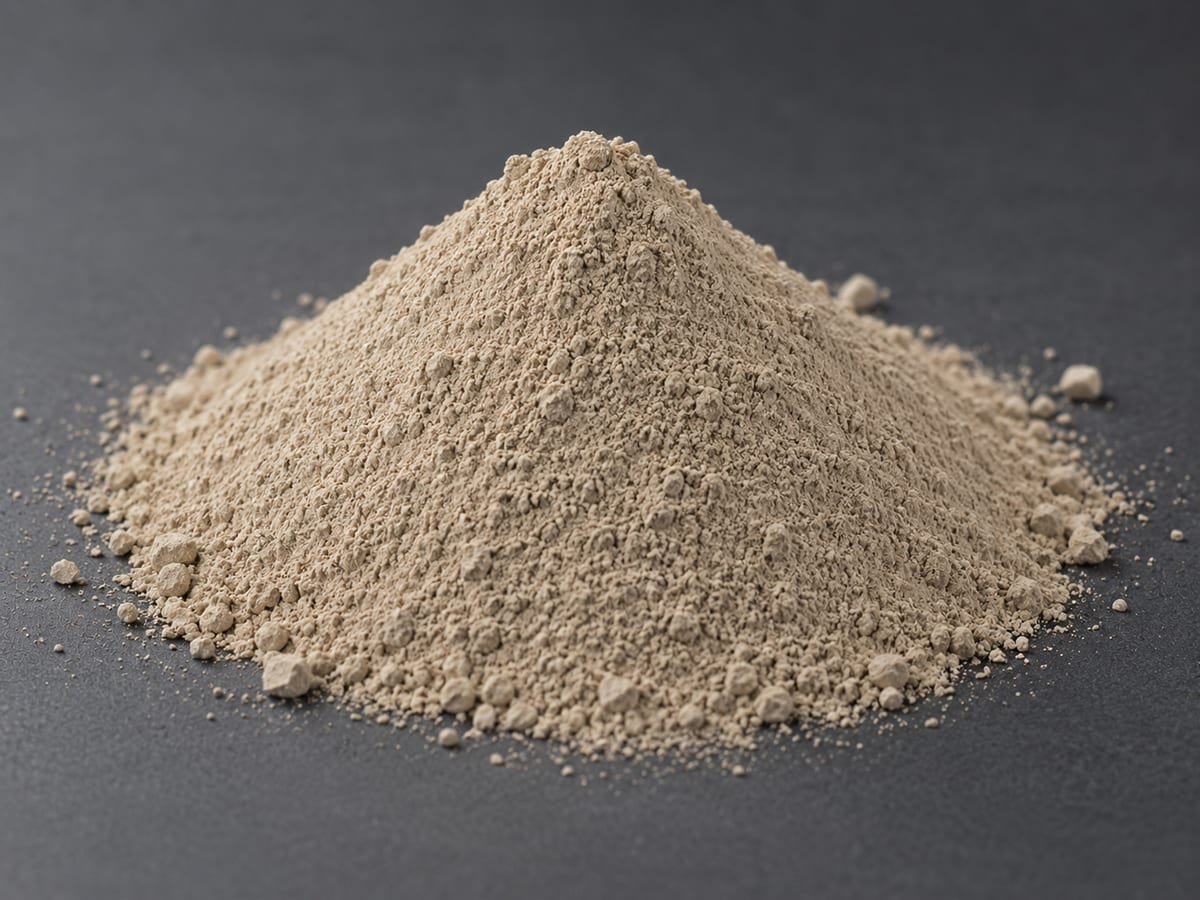

Bentonite is sold for drilling fluids, civil and environmental sealing, foundry and ceramics, and a product that suits one of these may not suit another. In oil and gas regions such as Saudi Arabia and the GCC, drilling-grade bentonite is a frequent purchase, and compliance with the specification, not the word “bentonite”, is what the buyer needs to verify. This checklist helps you compare suppliers on facts before asking for a price.
This is a buyer’s reference, not a PLAXRAW product specification. The material is described on the bentonite reference page. PLAXRAW does not publish prices or stock on this page; to discuss a requirement use the quotation request form, and any grade, availability and price are confirmed in writing for your enquiry.
Step 1: Fix the application before the grade
- Drilling fluids: the product should meet the drilling-fluid specification you work to (for example API Spec 13A); see API vs OCMA bentonite compliance.
- Civil and environmental sealing: geosynthetic clay liners and similar uses are judged by tests such as ASTM D5887, D5890 and D5891.
- Ceramics and other uses: plasticity and particle-size consistency drive the choice; follow your process specification.
State the use and the specification you must meet. Quotes that do not name a specification cannot be compared.
Step 2: Specify the product, not just the name
| Item | What to ask for | Why it matters |
|---|---|---|
| Specification | The standard the product is certified or tested to (for example API Spec 13A / ISO 13500 for drilling) | Names alone do not prove compliance; ask for results. |
| Type | Sodium or calcium bentonite, and any treatment, as declared by the supplier | Swelling and rheology differ strongly by type. |
| Rheology and yield | Viscometer reading, yield and viscosity results under the specified test | The main performance indicators for drilling use. |
| Fluid loss | Filtrate loss result under the specified test | Indicates sealing behaviour in a drilling fluid. |
| Moisture and fines | Moisture content and residue on the specified sieve | Affect flow, storage and mixing behaviour. |
| Packaging and storage | Bag or bulk packaging and storage guidance | Moisture uptake changes handling and performance. |
Step 3: Ask for the documents that prove it
Request the current technical data sheet (TDS) and safety data sheet (SDS) for the exact grade and a certificate of analysis (COA) per shipment reporting the tests the specification requires. Test a sample from the shipment against the specification before accepting volume, and see swelling variability and moisture control in storage for what to watch.
Step 4: Fix the commercial terms
-
Packaging: 25 kg bags or big bags on pallets with moisture protection, or bulk where the site is equipped for it.
-
Quantity and timing: trial quantity, regular volume and delivery window.
-
Delivery term: state the Incoterms 2020 term you want quoted so offers are comparable.
-
Import requirements: confirm with your customs broker which conformity and customs documents apply to your product in Saudi Arabia or the destination country before shipment.
Compare offers by landed cost per usable unit, including freight and trial cost, not by the ex-works figure alone.
Enquiry template
- Use and the specification required (for example API Spec 13A / ISO 13500).
- Critical properties and acceptance limits.
- Sodium or calcium type and any treatment constraints.
- Required documents (TDS, SDS, COA with test results).
- Trial quantity and regular volume.
- Packaging, delivery place and Incoterms term.
Send it through the PLAXRAW quotation form. PLAXRAW reviews it and replies with the relevant questions or options; it does not promise stock, specifications or lead times before the details are confirmed.
Related reading
- API vs. OCMA Bentonite Grade Compliance for Drilling Fluids
- Bentonite Swelling Variability in Drilling Fluids
- Bentonite Moisture Control and Flowability in Storage and Handling
Sources and editorial scope
Prepared by the PLAXRAW editorial team on 15 October 2026. This is editorial buying guidance, not PLAXRAW laboratory data, and it contains no price, stock or lead-time commitment. Standards are named so you can ask a supplier which method applies; consult the current edition of each standard for its scope.
- API Spec 13A / ISO 13500 — Drilling Fluid Materials: specifications and tests.
- ASTM D5887, D5890 and D5891 — Geosynthetic clay liner test methods.
- US EPA — Geosynthetic Clay Liners Used in Municipal Solid Waste Landfills.
- USGS — Mineral Commodity Summaries 2025, Clays (Bentonite).
- ICC — Incoterms 2020.
Content updated: